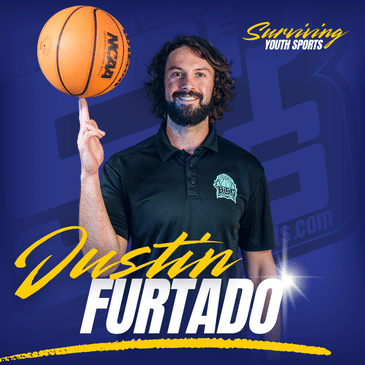
Rhett Parker: welcome to another episode of surviving youth sports. And today we have coach Justin Furtado from BTG basketball. And I was already lucky enough to join his podcast, my first one ever. So I'm super excited to have you, you, you want ours, Justin.
Coach Justin Furtado: Hey, thanks for having me. It's fun to be on the flip side and not have the pressure of asking all the questions. So I'll turn it over to you.
Rhett Parker: Absolutely. But I think the beauty of what we're trying to do with our podcast, is that there's no script, there's no sugar coating, the conversations are organically going to certain places. And, my feed, obviously, now that we've started this is just, it's blown up to like, God, I all these podcasts go. And there's some really good ones out there, too, by the way. but man, there's just a lot of like, dude, is there a prompt, like a teleprompter behind like, saying something either really controversial that they probably don't even believe in or yes, like it's okay to just help people. So tell us about, your basketball program and, and the foundation and why you got into all this, man. It's, truly a remarkable story.
Coach Justin Furtado: Yeah, just for clicks, yeah. Of course, yeah, so our platform is BTG Basketball, stands for Beyond the Game Basketball. At the end of the day, most of your listeners, whether they're coaches, parents, we all know that a majority of the kids that we coach talk about youth. So we create content for youth on the podcast. Our focus is youth, ages nine to 17. Most of those kids are not gonna play college sports, especially with the way NiL is and the recruiting of an international players and they're definitely most of them are not gonna play professionally So how can we help these young men and young women be prepared to be successful for life beyond the game? So that's where it came from my experience. I only played varsity baseball varsity basketball youth sports were Honestly, like if I was gonna have that pie chart the pie slice of sports in my development as a human being would probably be my greatest slice. Now, obviously there are other factors like my hometown and all that, but youth sports were always something that was really important to me. And so I got into coaching actually through the Boys and Girls Club, took a coaching class at University of Oregon. I'm a duck, that's my alma mater. And so I got into coaching to just make an impact on youth. I didn't even know that you can make a living. coaching basketball, like to me I look at my coaches in high school They were a PE teacher and a coach there wasn't this huge explosion of club sports private training That's all exploded now like for me as a young adult and being able to take use that as an opportunity I don't want to say take advantage because that's not the right word because there's a lot of people taking advantage of families and kids and Parents and I'm sure we could go down that rabbit hole. So
Rhett Parker: Mm-hmm.
Coach Justin Furtado: We're club basketball, a developmental organization, and we're actually making some shifts. So I'll kind of share with you some of the shifts. Like I was a high school coach. I've been a high school coach. I'm going to the girls side on the varsity side coming up in this year, been on the boys side previously. So my program was concentrated a lot on high school the last three, four years, just because that's, know, when you are building a business, it's all relationship based, especially in youth sports. So.
Rhett Parker: Mm. 100%.
Coach Justin Furtado: That's where predominantly a lot of our club teams have been developmental program, not on the Adidas circuit, the Nike circuit. I never cared about any of that. I don't care about the clicks. so with that being said, we're shifting now more towards a younger age focus starting the fall. We'll start teams at a 10 U level and I want to start building something in between recreation sports and we'll, I'm sure we'll have a conversation on the nuances and like competitive sports. Cause right now There's a lot of stuff on, there's rec and I have a lot of parents coming and talking to me about, hey, this is awful. Like my kid is not getting better. It's incredibly unorganized. And then there's competition. I, between the now, the time that you were on the podcast and now that I'm speaking with you, my girls lost 93 to 10. We've just been getting blasted. And so my 13 new boys, similar thing, been losing my 50, 60.
Rhett Parker: Mm-hmm.
Coach Justin Furtado: Right what that tells me is they're not ready for that competitive world. So I've actually found some really cool local games where we can go play one game on a weekend instead of four. And you we lost by five last weekend. Great. super super competitive at our level. So we got to play at our level and we're kind of a club in between. So there are some nuances of development and I tell the parents it's competitive development.
Rhett Parker: That's correct. Mm-hmm. Mm-hmm.
Coach Justin Furtado: because you have to be able to earn that play time and I know that we'll go there and talk about that. So I know I just went kind of wide, so go for it.
Rhett Parker: Well, yeah, I'm gonna go with this. So baseball has majors, AAA, AA, and I don't think there's really a single A. obviously major's the top, AAA's second, AA's beyond that. And here's what I've noticed at 12U with me coaching. We are a solid AAA team. But if you took two players off our team, we're a double A team. Sorry, and I know some of my parents will listen to this, but it is the truth, because we have two guys that, and one's just way bigger than everybody else, and he works really hard, and we're trying to teach him to get his fundamental base built up so that he won't always be bigger than everybody. But like, it's okay. I would just tell the parents, you don't have to go play majors. Like, especially at 12, like, we need to be... where we're in competitive games. Okay. That's all that matters. And, some people don't necessarily like hearing that, but it's the truth. And by the way, the difference, what I just said, and you'll agree with this, the difference between a top level basketball team and then the kind of a step below that and a step below it most of the time isn't because of the seven through 10 players or the six to 10. It's because the top two or three people are just
Coach Justin Furtado: Yes. this.
Rhett Parker: that much better than everyone else. And if you literally took those two or three people and put them on your team, the score is going to be flipped.
Coach Justin Furtado: Yeah, 100%.
Rhett Parker: And they don't get that though. Parents are just oblivious to that.
Coach Justin Furtado: Yeah, there's levels to it. And that's why, after that 93 to 10, I was like, okay, number one, right? This is not good for the girls confidence or development. I have to I have to do something about it. Number one, I'm too competitive. I can't like I can't even there's no adjustments I can make. It's not fun for anyone. So no.
Rhett Parker: Yeah. Right. Yeah, not fun for anyone. Shouldn't be fun for them either, Justin. It shouldn't be fun for the 93-point team. They didn't get any better either.
Coach Justin Furtado: No, they didn't get any better, right? And so at the end of the day, right, it's finding the right levels. And, I've had, I have every year, Kirsten Jones, she's the author of Empowered Athletes, and she came in and talked to our parents about, hey, don't compare your kid to other kids, because I know it's probably really hard, right? I'm actually, doing research. It's hard not to be like, my kid's not on the...
Rhett Parker: hard.
Coach Justin Furtado: Junior EYBL circuit and like that it really doesn't matter like it that stuff does not matter and like as a coach I like I really think like a coach now I kind of have pivoted from thinking like a player and I think some of that Has led to some of the frustrations Maybe some of my players had because I look at it as a team game, right? And I get it as kids and individuals you're looking at it as like me me me me and I know as a parent right you're looking through your lens of your kid, but as a coach, we're looking at through the team lens.
Rhett Parker: Yeah, and I know we talked about this on your podcast a little bit. And you and I have very similar philosophies on this. If you have someone on your team that's out of place. Let them go. Let them go develop for what they need to develop for. And that can be both ways. It can be someone that's not ready for that competitive level. And it can be someone that's Hey, man, you're this you're beyond this. You need to go to the circuit and you need to do this and And I just don't see a lot of people doing that. I really don't, So yes, it's the team, but it's also, you do have individuals on both sides of that spectrum. We're not, we're talking 10 % on each side or even less. Let, let those people go do what they need to do. So their experience is good. So look at it holistically, but like, then you can take a step back go, okay, like if I'm about development, that girl who's way better than her teammates best player in the gym needs to go find a new gym right
Coach Justin Furtado: Yeah, and I've had that conversation unfortunately before. There's this girl that came into the gym and she was the best girl in the gym and I had the conversation with the dad after. I was selling it, right? Because I wanted her in the gym but he was just like, I don't want her to be the best in the gym. I understood, right? I've never pushed back, like, ah, you gotta be here. This is the place to be. Because I had another conversation with a dad who was like,
Rhett Parker: Mm-hmm. Mm-hmm. Mm-hmm. Yeah. Mm-hmm.
Coach Justin Furtado: He has to make a decision between playing on his school's spring team or playing with your club. And he would immediately make an impact for our club. And I was just like, look, obviously we want him. Obviously we feel like we could develop him. He's got to talk to his spring, he's got to talk to his school coach because at the end of the day, his school team's more important. And I know he appreciated that candor. And so like that's, we got to be more honest with people. can't just take people's money because we're like, oh yeah, you can be over here, right? And I'll even share one more.
Rhett Parker: Mm-hmm.
Coach Justin Furtado: Is that I think a player that I had talked about on our podcast who had went to the circuit league team? Actually just came back to us last week because he's like I didn't like the practice environment because a lot of those teams the kids don't practice they just show up to games like the best kids and he didn't like that so he wanted to come back to us and like I let him go. I'm like, go check it out Go be with the best program and then he ended up coming back. So I think there's
Rhett Parker: correct. Yeah. Yeah.
Coach Justin Furtado: it's not always the end of the world the next day. It's like you're playing a long-term game.
Rhett Parker: Yeah. And sometimes, I mean, you talk about circuit and stuff, baseball's no different. The top, top guys can go do whatever they want. I mean, I hate saying that. They're just different freak athletes and they could play for me, they could play for you, they could play for anybody and they're going to be fine. And people, again, that just needs to, we just need to continue to have those conversations. So right before we get on, we were talking about
Coach Justin Furtado: They can do whatever they want. Yeah.
Rhett Parker: parent involvement, playing time, talking about development, not necessarily physically with your skills. And you're obviously a high school coach and have your program. What are the parents getting wrong? what are the parents, we're getting what parents are getting right, but what are the parents getting wrong right now?
Coach Justin Furtado: They shield their kids from pain. Like that's the number one thing I would say is like they Like pain is a part of life pain is a part of sports I think sports is the is the best place the safest place to feel pain and I'm not talking about like Like if your kids getting verbally abused or whatever like your coach is crazy. That's a different story. That's not what I'm talking about I'm talking about Right sitting the bench not getting the playing time that you want Your kid not playing a role that they want
Rhett Parker: Mm-hmm. Yeah.
Coach Justin Furtado: because a lot of times that's an issue too. Look, your kid's gonna have, unless you are able to hand pick their boss, their teachers at college for the rest of your life, right, and pay them off, like if you're able to do that, cool, right, but for the 99 % of people that I'm talking about, the boss, the teacher might be crazy, right, your boss might be crazy, how many of you have had crazy bosses, right?
Rhett Parker: Yeah.
Coach Justin Furtado: How are you able to deal and navigate and work with, leaders that you don't agree with? And how are you able to advocate for yourself? Because I've heard, I've had it a couple times, right? Obviously I've had a situation recently where a parent was very upset about the lack of playing time. And my reflection on it, I do like, always do reflect on how I could have handled it better. I think what I'm gonna do today at practice, because we have another game on Saturday, is be like.
Rhett Parker: Mm-hmm. Mm-hmm.
Coach Justin Furtado: this is how to earn play time. This is what you'll get. This is your ticket to perform more. You gotta turn the basketball over less. You gotta play like this on defense. You have to know our sets and that's how you earn more play time. And I think there is a responsibility of coaches to be very clear to parents and athletes how to earn that playing time. And so that's where I look at myself and be like, I gotta do a better job about that. Pretty clear, but I want to make it crystal clear. This is exactly and then I'll put like hey, I'm human I'm gonna make mistakes right at the end of the day. I'm gonna make mistakes So kind of have to you have to depend on your club So what I'm gonna do specifically is I'm gonna give like we're a development club. Like our team is not great So I'm gonna it's 20 minute running halves Everyone gets at least guaranteed four minutes Like this is how I'm gonna run it and I'm gonna let everyone know now second half will be purely performance based on the first half
Rhett Parker: Mm-hmm.
Coach Justin Furtado: It'll be rotations, it won't be scripted, and that's how I'll rock out and do it, and I'll let everyone know and be very clear about that. And then your athlete has to ask, how do I get more playtime in that second half?
Rhett Parker: Mm-hmm. Mm Well, you're setting expectations. And I think that's where a lot of that those things don't happen. Right. And and sometimes it's for different reasons. And sometimes money can cloud and influence can cloud coaches decisions within programs. And, winning can cloud things and losing can cloud things but That's why I feel like some people really shy away from giving expectations, but parents. So the big showcase we run the PNW regional games. I meet with every team before. Okay. And then she have older kids that have been there for a few years and their handpicked from five States and British Columbia kept some of these people know me well. Some don't you get to the younger kids, but it's the same conversation every art. All right, gosh, there's, 70 scouts and coaches here. Go have fun, go play hard, go compete. Okay? There's only one rule. And you know, get the young kids, get the blank stare of like, okay. And they're like, well, have fun. No, play hard. No, nope, nope, no, no, no. If your parent comes up to me or any of the other coaches and says one word about playing time, you're out, you're gone. You will immediately get thrown out of the event. It's happened three times in 11 years. Okay? Here's your money back. Here's your money back. Don't care. We don't charge that much anyways. But, and I'd probably say a little bit more forcefully than that. We'll be nice here. But I go, in all the emails. And if you think your parent is that person, you need to run over and tell them, you're like, stop warming up and go tell them. Because all you have to do, if you feel like you're not a pitcher only, if you feel like you didn't play shortstop enough, you feel like you, all you have to do is come ask. And. We're dealing with 400 kids over, four or three classes. We're going to make mistakes, guys. Like we just are and you don't play for us. Some of you will never see again. Like we're going to make a mistake. And sometimes it's you're not a source up in college. That's why you're not playing source up. And sometimes like, shoot, you only got one at bat. Gosh darn it. All right. Next game. Hey, Johnny's leading off. Don't take him like he's he's rolling. He's going to get his four at bats and Johnny's going to go showcase himself. And man, the look on the kids faces is like, what? We've had a ton of kids come up to me and they're very nervous a lot of the time and they're like, hey, hey Rhett, I didn't play center field and that's my spot. I'm like, really? okay. Hey man, thanks for coming. Like we'll go change it or we'll give you an explanation but that's setting the expectation. And I don't wanna hear from you as a parent. Like I don't care. I don't care. You you want to ask me, guys, my kid have a good attitude today? I'm in. You want to talk to me about grades? You want to talk to me about recruiting? Because we're there to help. I'm all in. You talk to me about anything that happens between those white lines? Dude, go, like go. And it's one of the times it caused a massive problem because it was a bigger prospect kid. And then he tried to, this was when we were first starting too, he tried to sink us. And I go, nope, you knew the rules and you.
Coach Justin Furtado: Yeah. Yeah, right.
Rhett Parker: like looked me in the eye, cussed me out. I said, I know you're not talking about playing time. He said, yep. go, he's out, bye. Pack their stuff up, see ya. How do we, we're getting this wrong with parents, Justin. Like the parents are getting it wrong. What do we do? What do we do to change, just keep like hammering it home to the kids?
Coach Justin Furtado: That's a great question. like, I think what you're, obviously if you've only kicked three people out in 11 years, to me that's success, right? So I think that's, yeah, scared a lot of people, right? I think maybe I need to be sending more emails, right? Like that. And I think for me as a club organizer, clarifying to my coaches, right? What are the standards? What can, play time? Cause one of the biggest things is, you've probably seen it all the time is like commitment.
Rhett Parker: We scared a lot of people. Mm-hmm.
Coach Justin Furtado: and we talk about commitment, but it's like, I got piano lessons at this and that, and like that's cool. But if you're not there, you're not gonna be getting better. And I have this, you my team is not deep, so I have this one player that I told, like, if you don't come to both practices this week, we need you. You'd be our starting point guard every day, every day, but you're missed one for two, so you can't start, right? I can't say I'm gonna bench you for a half, because then we just...
Rhett Parker: Good.
Coach Justin Furtado: We need her for ball control, unfortunately, right? If I had a deeper team, I would be like, boom, you're done. You're not gonna play until the second half. But I was just like, all right, you're not gonna start if you only come one for two.
Rhett Parker: Right. Yeah. Mm-hmm. Yeah. Yeah. But that's okay though. If you want to come one for two, come one for two. If you like piano better, go do piano. It's people that, and I like the fact that you're setting some standard, but you're not going, God, if you miss one, you ain't playing. Because I don't think that's fair to people either. You just said it, we're not developing college athletes or pro athletes is not our end goal. If you need to miss, Miss. Like, I have no problem. I tell my players all the time, the 12 of you kids, if you need to miss, go miss. But there could be repercussions of you missing. and that's a choice that you have to make. But I'm not gonna sit there and be like, God, if you play soccer over baseball, you're done. Like, you won't play. That's BS. And there's so much of that happening. and especially I'm talking to my sister-in-law last night at a softball game and my niece is a good little athlete, but she plays on probably the fourth or fifth soccer team. And the coach is like, you miss, you're off the team or I'm not taking it. I'm like, dude, this is not the top team. I mean, not even close. And listening to her talk, I was like, what? That doesn't make any sense because the expectation for that team
Coach Justin Furtado: Yeah. Yeah. Right.
Rhett Parker: Should be it's okay to miss because you're doing other things. You're, I was like flabbergasted. My jaw dropped. I was like, if you're the one team, okay, that's your rule. Great. I get it. You're the fifth team at that age group. What are you talking about? Yeah. Sixth grade.
Coach Justin Furtado: Right, and they're younger, right? Yeah. Yeah, sixth grade, yeah.
Rhett Parker: What the hell are you talking about?
Coach Justin Furtado: Right. No, it's, it's, it's how.
Rhett Parker: So how do you deal with that? How do you deal with that? If you're a coach and I come to you as a parent, I'm like, hey, coach over here for school ball, coach over here for, know, and school ball is different. In middle school, I don't put a lot of stock into middle school sports or, or I'm playing, soccer, but it's my second sport, but coach is just all over me because I'm more of a basketball player. What do you tell that person,
Coach Justin Furtado: Yeah, it's tough. think finding that, and that's why, at least when you're doing club, right, it's a little different for school, because you don't get to choose your coaches. But I do talk about all the time for parents, like you have to do your research on the club. What type of club is it? How are they going to treat your athletes? Like what's their development philosophy? And then, where is your kid at? Right? Is your kid, there are going to be repercussions if your kid doesn't go to every...
Rhett Parker: Mm-hmm. Yeah.
Coach Justin Furtado: practice, which, your kid has to be okay with living with, right? Especially if they're, let's say, towards the bottom of the team and it's, a competitive team and they don't show up, like, that is going to affect their play time.
Rhett Parker: Mm-hmm. Yeah, but this is not like, it's, it's not wreck. But it's just above that. It's not this super competitive. That's the part where I'm so lost. Like, why are you made because then the kid feels like the kid feels like they're doing something wrong. And they're not they're just have more interest than being
Coach Justin Furtado: Yeah. Yeah, that's a nuance. Right.
Rhett Parker: the best soccer or baseball or softball or basketball player. And that's, we should be championing that the fact of doing all these cool things, right?
Coach Justin Furtado: Yeah, and we forget about that as coaches and I think part of it comes from you're probably playing in the wrong level. Like if your team, you gotta meet your team where they're at, right? A lot of times, like we want the kids that are just gonna be grinders. We wanna coach the most competitive teams. But in reality, what can we teach the kids that came to us that are on our team? What level are they at? What life lessons do they need to hear?
Rhett Parker: Mm-hmm. Mm-hmm. Mm-hmm. Mm-hmm.
Coach Justin Furtado: They don't need to hear the Kobe Mamba mentality about how to show up at 4am to work on hitting off the tee if they're in 12U, the third team. They just need to, to me, go have fun and build social skills because that's what these kids really need.
Rhett Parker: Yeah. Go have fun. Yep. And become fans of the sport, whatever you're playing. Like that's the frustrating part about what some of these guys do is that you're talking about, maybe just above rec, if they have a bad experience, man, they're not hyped about the world cup coming in and soccer. They're not. They're going to be like, yeah, God, man, I hated this coach. How many people have you heard that from his parents? Like, man, when I was 13, I had the biggest jerk of a coach in baseball or bat and they're like, yeah, I hate that sport. It sticks with you.
Coach Justin Furtado: Yeah, it does stick with you and that's something I talk about all the time to my coaches is like we want them to continue playing and have people have a positive experience and I think we have to have conversations because there's gonna be challenging times not like practice is always gonna be sunshine fun and rainbows especially as you rank up, for me as a as a high school coach There are gonna be days where I'm gonna be on you and it's gonna be hard
Rhett Parker: Mm-hmm. Mm-hmm. Mm-hmm. Yeah.
Coach Justin Furtado: And I think it's really important, I always do my best to remind the kids, I am hard on you because I care about you and because I want the best for you and when you're not giving me your best, I'm gonna let you hear it. And just really making sure you make that clear to the kids. Because I think sometimes naturally we just do it but we don't tell the kids that and they do need to hear that.
Rhett Parker: Yeah. Yeah. And going back to the parent thing, man, I'm hard on your kid and it needs to be in the right way. You said it earlier. We can't be abusing the kids and we need to do we need to do it in the right way. But man, let your kid fail. Like, like you can even the people that parents that have money, you cannot push your way through sports. You can't.
Coach Justin Furtado: Yeah. No. Yes.
Rhett Parker: at some point that will stop. How is your kid gonna react to not getting into the college that they wanna get into? To not getting the job they wanna get into? Sports will be, and even the high level people, hey man, I had to call my parents a couple times and be like, hey, I'm coming home, don't have a job. And their response was, well, you made $1,000 a month playing baseball. So we're not too worried about your financial situation, because it's... It's about the same. You're living in poverty, but like it sucks. That conversation is like, Oh man, what am I going to do now? Do I keep trying to play? Do I not? And that's hard to deal with even when you're 23, 24 years old and it's going to come for everybody. And if you shield your kids from hard conversations and most of the time it's not hard. If your kid goes and talks to you, to the coaches that you trust, if you trust the coaches,
Coach Justin Furtado: Right.
Rhett Parker: then you're in the right program. That's going to be a better conversation parents than you can imagine, and you're teaching them how to be an advocate for themselves and fail and be uncomfortable. And that's okay, man. It's going to make them such a better person.
Coach Justin Furtado: The bill comes through at some point, right? If you want to shield them from all the pain until they're 18 years old and they go to college, they're screwed. They're going to fail their college test and they're going to be broken. I think resilience is a top three skill you learn from sports. And I think the bench and pain and losing is the most important part of sports, not winning. Obviously, I love the social skills, the team camaraderie, all that stuff. That's really important too. But I just think for an individual, the resilience you can learn through sports is the most individual, the most important individual skill, mental skill, in my opinion, that you can learn. It's just like, that's like for me, I rode the bench my senior year of varsity basketball and I've had people tell me like, you should have been in the rotation, da da da da. But I figured out ways to contribute, right? I would kick my players, you know. I would work in practice, would bring energy, I figured out ways to bring value even though I didn't see the floor. I talked about it in recent video, if I let the bench, if I moped on the bench, BTG basketball would never be, I would be working somewhere else, I don't know where I'd be, but I wouldn't have been around basketball because I quit.
Rhett Parker: Mm-hmm. And you
Coach Justin Furtado: So that's why I feel so passionate about the bench and that it's actually a really good learning tool.
Rhett Parker: You wouldn't be impacting people either. And I think that's really important. And I got benched my sophomore year of college and in conference, I was leading our team in hitting because me and the coach didn't get along. I made some mistakes that I could recognize now. Wasn't the right fit for program. For sure. I wish somebody would have told me that before I went there, but I met my wife there, so I would never trade it for anything in the entire world. Okay. And man, I didn't handle it great to start. And, I think I pinch hit maybe 14 times. I don't think I had to hit the rest of the year. It was brutal. And it messed with me and it was awful. But what? I look at some of the things I've gone through in my businesses or investments and different things. And that worst situation for me as a player. best thing that happened to me ever for so many reasons in my life, so many reasons. And it was brutally hard man. And I'll give, I'm shot my dad out a lot. His head's going to get big on these podcasts, but he came to, it drove three hours to every game, sat by the bench, didn't say a word to the coach. He just sat there. He knew I wasn't going to play. He came to every home game. He knew I was, you want to know why? Because in, I go, you don't have to do that dad. It's fine. He goes,
Coach Justin Furtado: Mm-hmm.
Rhett Parker: I need you to know I'm here for you. And I need the coach to know we ain't quitting. We are not quitting and you have my support. And then I look back on that. Now I'm like, man, that guy's a grinder, dude. I mean, literally would give me a nod and get back in his car and drive home. Bam, did it 15 times, man. Three hours there, three hours back. maybe saw me pinch hit or pinch run, cause I could run. And the guy just did, he's not, it's not my job to say a to the coach. Have you talked to him? go, yeah. And I told him how I feel and we don't agree. Okay. Like, but man, I want parents to hear that one. Like that's a grinder. That's somebody that got it. And and now he talks, all the mess in the world about that situation because he can and but yeah, man. So.
Coach Justin Furtado: Yeah.
Rhett Parker: What do you want to tell, because I feel like this is very parent heavy and athlete heavy episode. What do you want people to take away from what you're doing and how they can help themselves as families out there trying to survive this crazy youth sports world?
Coach Justin Furtado: Instead of asking, why, basically why me, right? Instead of being a victim and being like, my God, I'm paying $500, right? We gotta ask ourselves more questions. Number one, what is this potentially teaching my athlete long-term, right? So I think that's the number one question you should ask before you jump and rush in, right? And number two, right, how can you support your athletes? So asking them questions. Have you talked to your coach about play time? Have you talked? Do you have a clear sense of direction, right? Empowering them to go and take and make decisions and advocate for themselves, right? And be supportive like your dad. I think that's a perfect way. He did it perfectly, right? I'm here for you. You know, like I love you. Whether you play 20 minutes or zero minutes, I'm here for you. And I think that's really important for kids to hear.
Rhett Parker: Yeah, absolutely man. Yeah, man grinder. just I was it just gave me inspiration and obviously transferred after that year to to because man there's there's moments I'm like, man, I don't want to do this and my love for the game is gone and and and those types of things are so huge for people. So that's awesome man. I love we said it on your pod like I love what you're doing man and and I can't wait to see it grow and and finding that.
Coach Justin Furtado: Yeah, of course.
Rhett Parker: in between, really competitive and rec is just such if you can hit that niche, like for any sport, you're going to be so successful because you're going to get a lot of people around you that get it. So, yeah, man, let people know about, know, your where can we find your program and your podcast on social medias and websites and people can learn a little bit more about what you're what you got going on.
Coach Justin Furtado: Of yeah, so you can our podcast is beyond the scoreboard with coach for Tato It's on Instagram. I think it's the beyond the scoreboard Our club basketball program in West Los Angeles is BTG basketball find it at BTG basketball org BTG basketball on Instagram There's a couple fake ones. So just follow the one with that doesn't look fake, right? You can follow my personal coach for Tato. I don't really post it
Rhett Parker: You
Coach Justin Furtado: ton there. Beyond the Scoreboard and BTG is going to be the main place. I really appreciate you having me on and always enjoy our conversations.
Rhett Parker: Absolutely brother man, we'll keep on surviving, surviving youth sports together. Awesome man. Thanks Justin.
Coach Justin Furtado: on surviving. Exactly. Appreciate you.