
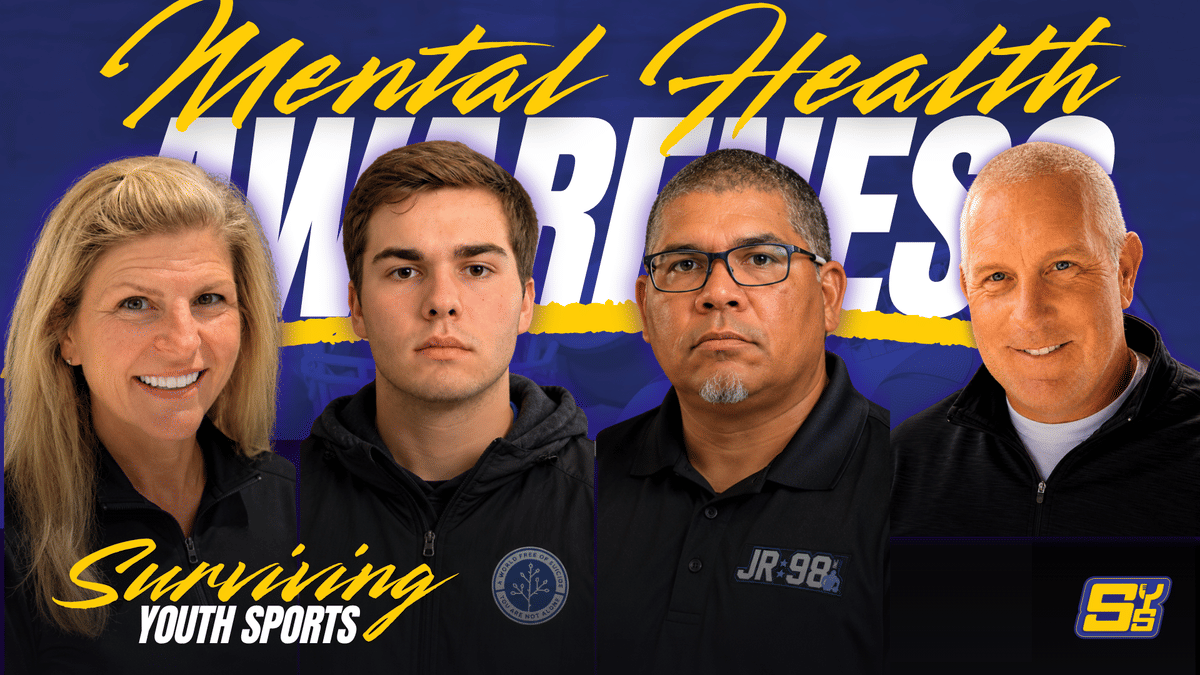
This episode is one of the hardest and most important conversations we’ve had on Surviving Youth Sports.
Rhett sits down with Carson Leiden from A World Free of Suicide, Corey and Kelly Widman from Widdy’s Work, and Carlos Ramirez from JR98 Inc. to talk about mental health, suicide prevention, pressure, identity, and the realities many athletes, parents, and coaches quietly carry.
The conversation goes far beyond sports. They discuss grief, social media, vulnerability, comparison culture, and why making these conversations normal matters so much for young people today. There are no easy answers in this episode. Just honest stories, lived experiences, and people trying to help others feel less alone.
For parents navigating youth sports, this episode is a reminder that behind every athlete is still a human being. Sometimes the pressure kids feel isn’t visible until it’s too late.
Subscribe
Apple Podcasts
Spotify
YouTube
Guest Resources
A World Free of Suicide
A nonprofit focused on mental health education, suicide prevention, and creating open conversations for young people and communities.
Website: aworldfreeofsuicide.org
Instagram: @aworldfreeofsuicide
Widdys Work
A foundation created in honor of Reese Widman dedicated to breaking the stigma around mental health and reminding people it’s okay to ask for help.
Website: widdyswork.com
Instagram: @widdys_work
JR98inc
A nonprofit honoring Gene Ramirez that provides mental health awareness, suicide prevention advocacy, scholarships, and support resources for athletes and families.
Website: bold.org/donor/jr-inc/
Instagram: @jr98inc
Crisis Support
If you or someone you know is struggling, call or text 988 for the Suicide & Crisis Lifeline.
Key Takeaways
Sometimes the strongest people in the room are fighting battles nobody can see.
Youth sports culture often teaches athletes to appear tough instead of being honest about what they feel.
Social media has made comparison constant for young athletes, even when what they’re comparing themselves to isn’t real life.
Parents and coaches don’t need to have perfect answers. But kids do need safe people willing to listen.
A player’s identity becoming tied completely to performance can create emotional pressure long after the sport ends.
Soundbites
“Sometimes people are fighting battles that you can’t see.”
“Sports does not define who you are.”
“Don’t ask questions. Just listen.”
“The sooner we talk about it, the better.”
“What you see on social media is about 1% of most people’s lives.”
“Sometimes the most important thing you can do is just listen.”
“A lot of these kids’ identity is tied to their sport.”
“What you see on social media is about 1% of most people’s lives.”
“If we want kids to know it’s okay to ask for help, we have to make these conversations feel normal instead of terrifying.”
“Sports is something you do. It’s not who you are.”
Episode Breakdown with Timestamps
Watch on YouTube or Listen on Apple or Spotify and follow along
[00:22] Why This Conversation Matters
Rhett introduces one of the most emotional and important episodes the podcast has done.
The panel focuses on mental health awareness, suicide prevention, and youth sports culture.
The conversation is rooted in real personal relationships and lived experiences.
[01:13] Carson Leiden Shares His Story
Carson explains losing a friend to suicide in eighth grade.
He talks about struggling mentally himself and eventually creating A World Free of Suicide.
The foundation focuses on education, advocacy, and creating conversations around mental health.
[01:51] Corey and Kelly Widman on Reese’s Legacy
Corey and Kelly explain how Widdy’s Work started after losing their son Reese.
Reese left messages encouraging people to seek help and support others.
They discuss how helping others has become part of their healing process.
[07:53] Carlos Ramirez and JR98 Inc.
Carlos shares the story of losing his son Gene Ramirez, a respected coach in the Tampa Bay Rays organization.
JR98 Inc. now provides mental health talks, scholarships, ambassadors, and support resources.
Carlos emphasizes how mental health struggles can affect anyone, regardless of success or status.
[10:51] Explaining Suicide to Kids
Rhett shares a conversation with his sixth-grade son about the episode topic.
The panel reflects on why the word “suicide” feels uncomfortable and scary for many people.
They discuss the importance of making these conversations feel safe instead of taboo.
[12:00] Breaking the Stigma Around Mental Health
Corey explains that talking about suicide does not increase the likelihood of someone doing it.
The group compares mental health struggles to physical illnesses people do not choose.
Vulnerability and openness are framed as strength, not weakness.
[14:46] Why Mental Health Education Matters
Carson talks about never learning about mental health in school.
The conversation shifts toward emotional awareness and teaching kids how to ask for help.
Schools, parents, coaches, and communities all play a role.
[15:59] Listening Instead of Fixing
Carlos emphasizes the importance of listening without immediately trying to solve problems.
The group discusses how kids often look elsewhere for support when they do not feel heard at home.
Support systems matter more than most people realize.
[17:23] Social Media and Athlete Pressure
Rhett shares seeing professional athletes criticized online by strangers.
The panel discusses how athletes today never truly escape the pressure.
Social media comparison culture affects kids at younger and younger ages.
[21:39] The Comparison Trap
Carson reflects on comparing himself to other athletes online, even as a high-level recruit.
The conversation highlights how social media only shows the highlight reel.
Kids can feel behind before their own journey even begins.
[26:45] Toughness vs Honesty in Sports
Carson talks about how sports culture often rewards toughness over emotional honesty.
Rhett reminds listeners that sports should never fully define a person’s identity.
The panel discusses how hard it can be for athletes to ask for help.
[27:59] Identity Beyond Sports
Corey reflects on how athletes struggle when their sport ends or changes.
The discussion explores how parents and coaches can unintentionally add pressure.
They emphasize that young athletes need support beyond performance.
[31:31] Parents, Pressure, and Learning to Listen
Carlos discusses how youth sports culture often pushes kids too hard too early.
The panel talks about allowing kids to fail, grow, and enjoy sports naturally.
Listening becomes a recurring theme throughout the episode.
[34:52] Foundation Events and Resources
Carson shares details about Stomp Out Suicide baseball and softball camps.
Widdy’s Work discusses Stomp Out the Stigma and Strike Out the Stigma events.
JR98 Inc. highlights MLB outreach efforts, scholarships, and ambassador programs.
[40:24] 988 and Crisis Resources
Carlos reminds listeners about the 988 Suicide & Crisis Lifeline.
The group emphasizes that support can come from parents, teammates, coaches, or friends.
Sometimes simply being present and listening can change someone’s life.
[43:13] Rhett Reflects as a Parent
Rhett opens up emotionally about how the conversation impacted him as a father.
He reflects on pressure, vulnerability, and the importance of showing kids they are loved beyond sports.
The episode closes with gratitude, honesty, and hope that conversations like this can help people feel less alone.
Final Reflection
Youth sports can become so focused on performance, rankings, exposure, and outcomes that we forget how much kids are carrying underneath it all.
This episode is a reminder that mental health is not separate from sports.
It’s part of the experience.
And sometimes the most important thing we can do for the people around us is slow down long enough to really ask how they’re doing and mean it.
Call to Action
Subscribe and follow Surviving Youth Sports on Apple Podcasts, Spotify, and YouTube.
Share this episode with a parent, coach, athlete, or someone who may need to hear it.
And if you or someone you know is struggling, call or text 988.

Frank Decembrino: How Adults Ruin Youth Sports
Youth sports are supposed to be about the kids. But somewhere between travel teams, private training, exposure, money, playing time, and adult expectations, it can become hard to tell whose experience it really is. Frank Decembrino, founder of Clubhouse Baseball Academy and longtime leader of the Bo...

David Durand: Expectations can Steal The Joy of Youth Sports
Expectations Can Steal the Joy of Youth Sports When does “I want to get better” become “I have to get better or I’m falling behind”? Mental performance consultant David Durand joins Rhett Parker to talk about the pressure surrounding young athletes and how quickly sports can become tied to identity,...

Eddie Smith: You Can’t Buy Your Kid Opportunities
What does a Division I head coach actually look for when recruiting your kid? University of Washington Head Baseball Coach Eddie Smith has recruited and coached players across nearly every level of college baseball, including stops at LSU, Notre Dame, Virginia, Tulane, Utah Valley, and Lower Columbi...

Alyson Stemas: Parents Aren’t Crazy. They’re Uninformed.
Parents get called “crazy” in youth sports all the time. But what if a lot of that behavior comes from parents trying to navigate a system they don’t fully understand? Former competitive figure skater and youth sports parent Alyson Stemas joins Rhett to talk about raising a competitive young golfer,...
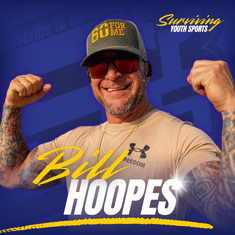
Bill Hoopes: Parents Are Losing Themselves in Youth Sports
Parents spend years driving to practices, sitting through tournaments, paying for lessons, and helping their kids chase their dreams. But somewhere along the way, how many parents start losing themselves in the process? Bill Hoopes, longtime softball coach, tournament director, author, and founder o...

Morgan Schill: Expectations Can Steal the Joy of Youth Sports
Expectations can inspire young athletes. They can also quietly steal the joy that made them fall in love with sports in the first place. Most parents don’t set out to create pressure. They simply want what’s best for their kids. But when winning, rankings, playing time, scholarships, or even the mon...

Craig Bishop: What Parents Say They Want vs. What They Actually Chase
Craig Bishop: What Parents Say They Want vs. What They Actually Chase What do parents really want from youth sports? Most of us would say development. But when the pressure of competition sets in, do our decisions tell a different story? In this episode, Rhett Parker sits down with longtime coach, p...

Breanne Smedley: The Pressure of Being a Girl in Sports
Girls are quitting sports at twice the rate of boys by age 13 , and it’s not because they don’t love the game. In this episode of Surviving Youth Sports , Rhett Parker sits down with Coach Breanne Smedley , former collegiate volleyball player, high school coach, mental performance coach, and founder...

Jonathan Carone: Are Your Kid’s Sports Really About Them?
What if the pressure we feel in youth sports has less to do with our kids and more to do with ourselves? In this episode, Rhett Parker sits down with Jonathan Carone, founder of Healthy Sports Parents, for an honest conversation about the hidden emotions that shape so many youth sports decisions. Fr...