
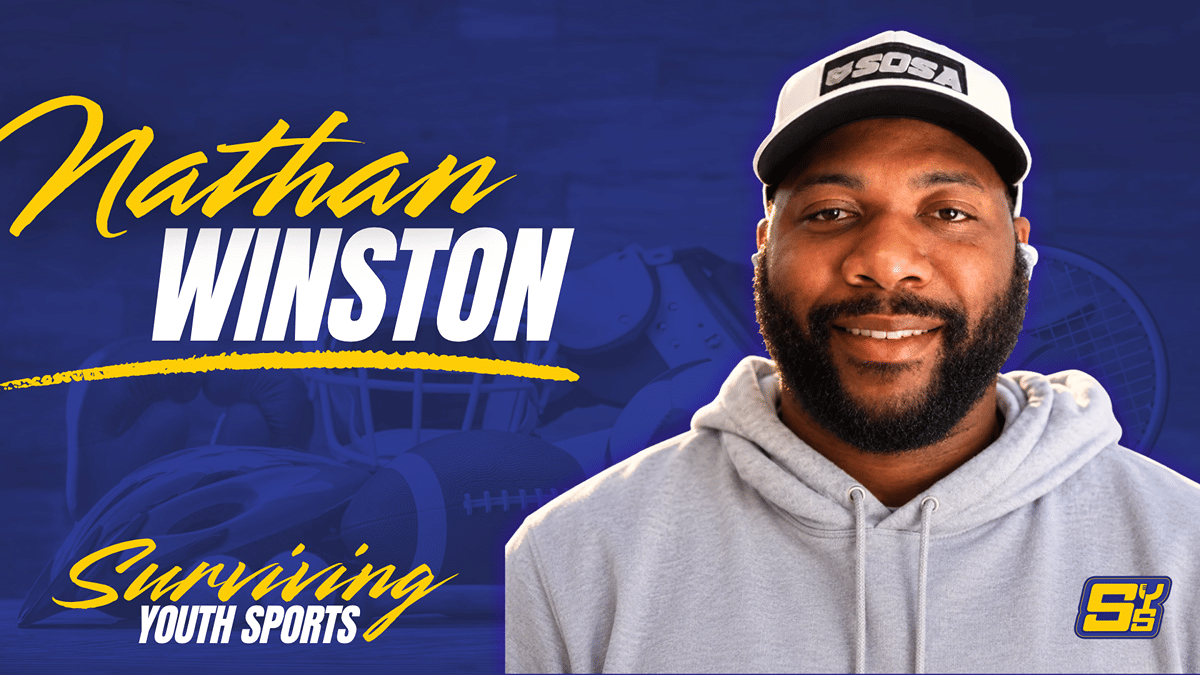
Episode Description
At four years old, Nathan Winston had his leg amputated. Doctors had told his parents there would be things he simply wouldn't be able to do. But Nathan grew up determined to find out what he was capable of for himself.
From playing basketball, football, and baseball as a kid to earning an opportunity in professional baseball, Nathan joins Rhett Parker to share the challenges, setbacks, and moments that shaped his athletic career. He talks about the coaches who gave him a chance, the ones who made assumptions about his abilities, and the work it took to develop confidence in himself.
Their conversation also explores something every athlete eventually faces: what happens when the sport you've built your life around comes to an end? Nathan reflects on losing baseball, finding his way back, and learning that failure doesn't have to define you. It's a story about opportunity, perspective, and why we should be careful about deciding what young athletes can or cannot accomplish.
Subscribe
Apple Podcasts | Spotify | YouTube
Guest Resources
Guest: Nathan Winston
Instagram: @great_nate8
Facebook: Nathan Winston
Key Takeaways
Give kids a chance before deciding their limits. Nathan remembers the coaches who saw what he could do instead of focusing on what they assumed he couldn't. Sometimes an opportunity starts with a coach simply saying yes.
Confidence is built through preparation. Nathan didn't develop belief in himself just by thinking positively. He spent hours practicing, adapting his movements, and learning how to compete with his prosthetic.
The mental side of sports matters. Whether it's recovering from a strikeout, overcoming embarrassment, or managing disappointment, Nathan believes athletes need to learn how to respond when things don't go their way.
Athletic identity can be difficult to lose. When Nathan's baseball opportunities disappeared, he struggled to figure out who he was without the sport. His experience raises important questions about preparing athletes for life beyond competition.
Failure doesn't have to be the end of the story. Nathan's career didn't follow the path he imagined, but he continued finding opportunities to play. Looking back, he values what he experienced rather than measuring everything by how far he advanced.
Soundbites
Nathan Winston [06:31]
"I've definitely had coaches that have put me in a box and told me, you can't just assume you can't do this, you can't do that."
Nathan Winston [07:24]
"I built that belief in myself just from working on it."
Nathan Winston [10:47]
"Enjoy it. Like you're in high school, enjoy it while you can, soak it all in 'cause this could be the last time that you ever play a competitive sport and you won't even realize it."
Nathan Winston [25:04]
"When you're an athlete and you've had sports your whole life and then it's crazy when it's gone, you're just like, Man, it's gone."
Nathan Winston [33:56]
"Don't let somebody else set your limit. nobody else knows what you're capable of but yourself."
Episode Breakdown With Timestamps
Watch on YouTube or Listen on Apple or Spotify and follow along
[00:00] They Told Him What He Couldn't Do
At four years old, Nathan Winston had his leg amputated. Doctors had already warned his parents about the limitations he might face. But how much of someone's future can really be determined at that age?
[02:23] The Coach Who Simply Said Yes
When Nathan first wanted to play baseball, his mother worried about how a coach would respond to his prosthetic. What happened at that first practice became one of the most important moments of his athletic journey.
[06:29] When Coaches Put Kids in a Box
Not every coach saw Nathan's potential. Some made assumptions about what he could and couldn't do before giving him a chance. Nathan explains where his confidence actually came from and why it wasn't just about believing in himself.
[08:46] The Mental Side of Youth Sports
What happens after a young athlete strikes out, makes a mistake, or has a bad game? Now a high school baseball coach himself, Nathan shares what he believes young players need to understand about the mental side of competition.
[11:15] Wanting It vs. Working for It
Every young athlete has goals, but how many understand what those goals require? Rhett and Nathan discuss the difference between saying you want something and making the daily choices to pursue it.
[15:32] The Challenges Nobody Saw
Competing wasn't just about learning how to move differently. Nathan dealt with physical pain, equipment failures, and constant adjustments that most teammates never had to consider. What did it actually take for him to stay on the field?
[18:43] The Tryout That Changed Everything
Nathan arrived at a college baseball tryout confident in his abilities. After facing five batters, he believed he'd done enough to earn a spot. What happened afterward left him questioning his future in the game.
[23:04] Finding His Way Back to Baseball
When one opportunity disappeared, Nathan entered a difficult chapter of his life. But his baseball story wasn't finished. An unexpected path eventually opened another door.
[25:04] When the Game Is Suddenly Gone
For athletes who've spent their entire lives playing sports, what happens when that part of their identity disappears? Nathan and Rhett reflect on something many young athletes don't fully appreciate until it's over.
[29:28] The Stories He Almost Never Shared
For years, Nathan didn't think there was anything particularly remarkable about his experiences. As he began sharing his story, he started realizing how much those moments could mean to someone else.
[30:47] Duct Tape, Allen Wrenches, and Halftime
During a high school basketball game, Nathan experienced a problem most athletes could never imagine. With only minutes to figure it out, he headed to the locker room carrying a secret nobody on his team knew about.
[33:56] Don't Let Someone Else Set Your Limit
After everything he's experienced, what advice would Nathan give young athletes, parents, and coaches? His answer challenges how we think about limitations, failure, and the opportunities we give ourselves and others.
[36:00] What Makes an Athletic Career Worthwhile?
Not every athlete reaches the biggest stage, but does that make their journey any less meaningful? Rhett and Nathan close with a perspective on accomplishment, opportunity, and the value of sharing our experiences.

Nathan Winston: They Said He Couldn’t. He Did Anyway.
At four years old, Nathan Winston had his leg amputated. Doctors told his parents there would be things he simply wouldn't be able to do. But Nathan wasn't interested in letting someone else decide what he was capable of. From playing multiple sports growing up to pursuing professional baseball, Nat...

Jordan Rifkin: We're Going Broke for Youth Sports. And We Love It.
Youth sports are expensive, exhausting, time-consuming, and sometimes downright ridiculous. So why do we keep signing up for more? Jordan Rifkin, better known as Broke Dad Jordan , joins Surviving Youth Sports to laugh about the chaos that comes with raising kids in sports. From travel baseball and ...

Jonathan Schindel: What If Youth Sports Actually Put Kids Before Profits?
What if youth sports put young people before profits? Jonathan Schindel, co-president of The Armory Foundation, joins Rhett Parker for a conversation about the business of youth sports and the families it serves. They discuss affordability, reinvesting in athletes and the community, academic opportu...

Kyle Pless: We’re Building Young Athletes Backwards
Youth sports keeps telling families to move faster. Join the better team. Train more. Get exposure earlier. Start recruiting younger. But Kyle Pless believes we may be building young athletes in the wrong order. In this episode, Kyle and Rhett talk about the pressure to be “elite” before kids have d...

Rachi Wortham: College Coaches Are Recruiting the Parents Too
College basketball has changed. NIL, the transfer portal, AAU circuits, trainers, and money have made recruiting more complicated and, in many ways, more transactional. Montana basketball coach Rachi Wortham joins the show to talk about what that shift looks like from inside a Division I program and...

Lorraine Eloms: Your Kid Doesn’t Need to Keep Up With the Joneses
Youth sports can make families feel like they’re constantly falling behind. Another athlete is training more, playing on a bigger stage, getting more attention, or seemingly moving faster toward the next level. Lorraine Eloms joins the show to talk about what that constant comparison does to both at...

Frank Decembrino: How Adults Ruin Youth Sports
Youth sports are supposed to be about the kids. But somewhere between travel teams, private training, exposure, money, playing time, and adult expectations, it can become hard to tell whose experience it really is. Frank Decembrino, founder of Clubhouse Baseball Academy and longtime leader of the Bo...

David Durand: Expectations can Steal The Joy of Youth Sports
Expectations Can Steal the Joy of Youth Sports When does “I want to get better” become “I have to get better or I’m falling behind”? Mental performance consultant David Durand joins Rhett Parker to talk about the pressure surrounding young athletes and how quickly sports can become tied to identity,...

Eddie Smith: You Can’t Buy Your Kid Opportunities
What does a Division I head coach actually look for when recruiting your kid? University of Washington Head Baseball Coach Eddie Smith has recruited and coached players across nearly every level of college baseball, including stops at LSU, Notre Dame, Virginia, Tulane, Utah Valley, and Lower Columbi...