
Episode Date: October 11, 2026
Episode Description
Youth sports is a business. Families spend thousands of dollars chasing opportunities, organizations continue to grow, and the pressure to keep up isn't slowing down. But what if we built a system where more of that money went directly back into the kids?
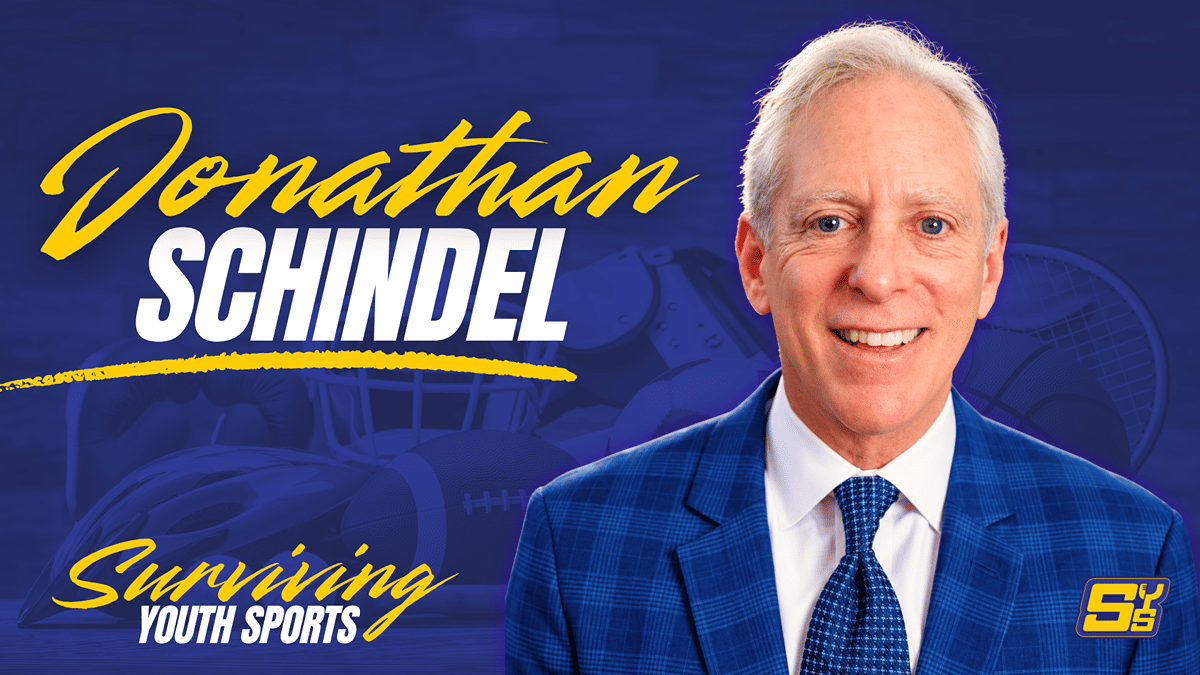
Jonathan Schindel, co-president of The Armory Foundation in New York City, joins Rhett Parker to explore a different approach to the business of youth sports. After spending 24 years in finance, Jonathan transitioned into leading one of the world's busiest track and field facilities, where revenue from competitions, sponsorships, and events helps fund educational programs, athletic opportunities, and community initiatives.
Together, Rhett and Jonathan challenge the relationship between profits and purpose. They discuss the rising costs of youth sports, the families being priced out, what nonprofit organizations can do differently, and whether successful businesses can create meaningful opportunities without maximizing every dollar. It's a conversation about what we're building, who it's benefiting, and why the best investment we can make might have nothing to do with producing the next professional athlete.
Guest Resources
Jonathan Schindel | The Armory Foundation
The Armory Foundation: https://www.armory.nyc
Armory Track: https://www.armorytrack.org
The Millrose Games, hosted at The Armory
National Track & Field Hall of Fame, located at The Armory
Key Takeaways
Making money isn't the same as making an impact. Profitable sports organizations can provide tremendous value. But Jonathan challenges us to think about where the money goes and how an organization's structure influences its priorities.
The cost of opportunity is leaving families behind. As youth sports become more expensive, some children lose access to experiences that could benefit them well beyond athletics.
Reinvestment can create generational opportunities. The Armory uses revenue from track and field and other events to support academic enrichment, college preparation, scholarships, and career opportunities for young athletes.
Parents deserve better information. With constant marketing around exposure, recruiting, and athletic advancement, families can struggle to distinguish meaningful opportunities from expensive promises.
We can't forget why kids play. Behind the business models, revenue, and competitive ambitions, youth sports should still be something children enjoy.
Soundbites
Rhett Parker [09:38]: "If you want to make money in sports and you're providing tremendous value, I have no problem with it."
Jonathan Schindel [11:34]: "At the end of the day, it comes down to the people."
Jonathan Schindel [13:28]: "I think what you've hit the nail on the head or the head of the nail is that structure matters."
Jonathan Schindel [21:00]: "And the price that gets paid is the families and the children that get priced out."
Jonathan Schindel [26:07]: "And I used to tell my kids when they were running, if you're not smiling, I want you to stop."
Episode Breakdown With Timestamps
Watch on YouTube or Listen on Apple or Spotify and follow along
[00:00] From Tennis to Track and Field
Jonathan shares how growing up playing tennis eventually led him to discover running at Duke University.
After missing an opportunity to join the college tennis team, he unexpectedly found success in a local 10K and eventually became a captain of Duke's track and field team.
How an unexpected change in direction became a lifelong connection to athletics.
[02:22] Leaving Finance to Build Something Bigger
Jonathan reflects on his 24-year career in finance and how bringing his children to a youth track meet introduced him to The Armory.
What began with a donation and board involvement eventually became a full-time commitment.
Why the opportunity to make an impact through sports convinced him to change careers.
[03:47] Inside The Armory Foundation
An introduction to the historic Manhattan facility, which Jonathan describes as the busiest track and field venue in the world.
The scope of its competitions, from young children to older adult athletes, and its role as host of the Millrose Games.
How the organization connects competitive athletics with meaningful community programs.
[05:51] A Nonprofit That Operates Like a Business
Jonathan explains The Armory's nonprofit structure and how it differs from a traditional for-profit sports organization.
How sponsorships, track meets, training fees, donations, and outside events generate revenue.
Rather than distributing profits to owners, the organization reinvests resources into athletes and community programs.
[09:38] Has Youth Sports Become Too Focused on Making Money?
Rhett questions why more sports organizations aren't following a model that reinvests revenue into participants.
The growing influence of private investment, participation costs, and the pressure to generate profits.
Jonathan emphasizes that successful organizations ultimately depend on having the right people and intentions.
[13:28] What Happens When Money Goes Back Into Kids?
Jonathan explains how nonprofit and for-profit structures create different financial priorities.
A look at The Armory's after-school educational programs and the support available to student-athletes.
How academic enrichment, college preparation, and career opportunities can create benefits that extend far beyond athletic performance.
[16:37] Just Because You Can Charge More, Should You?
Rhett shares his experience operating youth sports programs and keeping certain prices unchanged over time.
The difference between charging what families are willing to pay and charging what is necessary to provide value.
Jonathan pushes back slightly, explaining why maximizing profits can still be compatible with supporting charitable causes.
[20:01] Can Money and Mission Really Work Together?
Rhett points to stay-to-play hotel requirements as an example of a practice that can frustrate families when its value isn't clear.
Jonathan acknowledges the tension between financial growth and making sports accessible.
The difficult reality that rising costs can leave lower-income families and their children without opportunities.
[22:28] Are Parents Being Sold Opportunities That Don't Exist?
Jonathan discusses the difficulty parents face when navigating marketing, social media, and promises of athletic advancement.
Why having reliable information matters when families are investing significant money in their children's sports.
Rhett reflects on how these conversations influence his own thinking about baseball and the future of his foundation.
[23:26] Building Something That Lasts Beyond Sports
Rhett discusses his work with the KP Sports Leadership Foundation and his interest in mental health awareness and access to play.
The importance of helping children grow into people who will eventually support the next generation.
Why the long-term impact of sports should extend beyond wins, championships, and recruiting.
[26:07] If They're Not Smiling, What's the Point?
Jonathan shares the advice he gave his own children about enjoying running.
His vision for expanding The Armory's reach and creating more opportunities for athletes.
A reminder that sports can remain a meaningful part of someone's life long after organized competition ends.
[28:05] There's Still a Lot of Good Happening in Youth Sports
Rhett reflects on how easy it is to focus on everything going wrong in youth sports.
Why stories like The Armory's are worth sharing and learning from.
The conversation closes with an appreciation for the people and organizations making a positive difference in their communities.
Final Reflection
Youth sports doesn't have to choose between running a successful organization and making a meaningful difference.
But success raises an important question: Once an organization is generating revenue, what does it choose to do with it?
Jonathan's experience at The Armory offers one example of what can happen when an organization treats its athletes and community as its most important stakeholders.
Maybe the conversation shouldn't just be about how much families are willing to spend.
Maybe it should also be about what their investment is helping build.
Call to Action
If this conversation made you think differently about the business of youth sports, share it with a parent, coach, or organization leader who might appreciate another perspective.
Subscribe to Surviving Youth Sports on Apple Podcasts, Spotify, or YouTube, and reach out with your own experiences, questions, or suggestions for future guests.

Nathan Winston: They Said He Couldn’t. He Did Anyway.
At four years old, Nathan Winston had his leg amputated. Doctors told his parents there would be things he simply wouldn't be able to do. But Nathan wasn't interested in letting someone else decide what he was capable of. From playing multiple sports growing up to pursuing professional baseball, Nat...

Jordan Rifkin: We're Going Broke for Youth Sports. And We Love It.
Youth sports are expensive, exhausting, time-consuming, and sometimes downright ridiculous. So why do we keep signing up for more? Jordan Rifkin, better known as Broke Dad Jordan , joins Surviving Youth Sports to laugh about the chaos that comes with raising kids in sports. From travel baseball and ...

Jonathan Schindel: What If Youth Sports Actually Put Kids Before Profits?
What if youth sports put young people before profits? Jonathan Schindel, co-president of The Armory Foundation, joins Rhett Parker for a conversation about the business of youth sports and the families it serves. They discuss affordability, reinvesting in athletes and the community, academic opportu...

Kyle Pless: We’re Building Young Athletes Backwards
Youth sports keeps telling families to move faster. Join the better team. Train more. Get exposure earlier. Start recruiting younger. But Kyle Pless believes we may be building young athletes in the wrong order. In this episode, Kyle and Rhett talk about the pressure to be “elite” before kids have d...

Rachi Wortham: College Coaches Are Recruiting the Parents Too
College basketball has changed. NIL, the transfer portal, AAU circuits, trainers, and money have made recruiting more complicated and, in many ways, more transactional. Montana basketball coach Rachi Wortham joins the show to talk about what that shift looks like from inside a Division I program and...

Lorraine Eloms: Your Kid Doesn’t Need to Keep Up With the Joneses
Youth sports can make families feel like they’re constantly falling behind. Another athlete is training more, playing on a bigger stage, getting more attention, or seemingly moving faster toward the next level. Lorraine Eloms joins the show to talk about what that constant comparison does to both at...

Frank Decembrino: How Adults Ruin Youth Sports
Youth sports are supposed to be about the kids. But somewhere between travel teams, private training, exposure, money, playing time, and adult expectations, it can become hard to tell whose experience it really is. Frank Decembrino, founder of Clubhouse Baseball Academy and longtime leader of the Bo...

David Durand: Expectations can Steal The Joy of Youth Sports
Expectations Can Steal the Joy of Youth Sports When does “I want to get better” become “I have to get better or I’m falling behind”? Mental performance consultant David Durand joins Rhett Parker to talk about the pressure surrounding young athletes and how quickly sports can become tied to identity,...

Eddie Smith: You Can’t Buy Your Kid Opportunities
What does a Division I head coach actually look for when recruiting your kid? University of Washington Head Baseball Coach Eddie Smith has recruited and coached players across nearly every level of college baseball, including stops at LSU, Notre Dame, Virginia, Tulane, Utah Valley, and Lower Columbi...