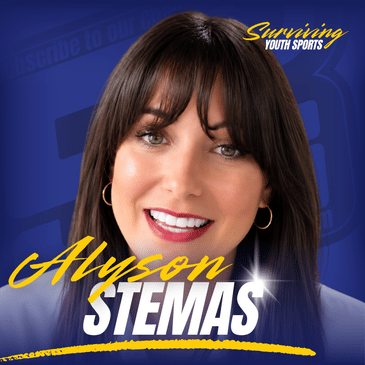
Alyson Stemas: Mm-hmm. Thanks for having me. ⁓ yeah, Alice and Stemmis, often mispronounced. It's all good, it happens.
Rhett Parker: I know, I even wrote it down too and I'm like, okay, I think I have this right. And then I realize I probably didn't even ask. It's all good. Yeah.
Alyson Stemas: No, it's okay. It happened so much. ⁓ happened over the weekend to my son who handled it like a champ, too. So it it just comes with the territory. So yes.
Rhett Parker: And so let's just get to your background, which is I i intriguing. I I did watch the movie The Cutting Edge when I grew up. and I think that's a glorified and and very very Hollywoodish ⁓ figure skating ⁓ movie, but ⁓ and I do love how it could be figure skating or baseball or or or mixed martial arts. Someone can just learn it within a year and then go off to the Olympics and be
Alyson Stemas: There you go. Yeah. Yes, yeah. I was a competitive figure skater. I started skating I think age four or five, ⁓ competed for many years, ultimately got injured as a teenager, took few years off to try horseback riding, which I loved and was also very good at. ⁓ And then went back to skating in high school and ultimately skated in college at Western Michigan. Synchronized skating, which is officially an Olympic sport now. So super excited for the sport ⁓ to kind of continue to expand. So ⁓ massive love for skating. Still love to watch it and you know kind of take the ice every once in a while myself. But ⁓ yeah, big fan
Rhett Parker: Well, I can't really skate, so I have the ultimate respect for any type of skating and I love to go watch hockey too, 'cause I I don't think people understand how hard it is to to skate and be fast and be able to cut and move. I mean, it takes years of practice and dedication, just like ⁓ the the other sports, but really, I mean, if ⁓ i i is it one of those sports
Alyson Stemas: Yeah. I mean it's not impossible. There's certainly people who've taken up skating as adults and have had much success. But I would say in the traditional sense of when we think successful, right? If we think about going to the Olympics or we think about just being a name, a Michelle Kwan of sorts, I mean you're starting young. ⁓ and I think, you know, I'm watching all the special specialization ⁓ conversation come out of like, don't specialize too young, and it's like I come from the sport where if you don't specialize, there's this consequence. ⁓ and it's very well known like you have to be great by 13 if you're gonna be great at all. And so it's just a really tricky dynamic. That said, we do do multiple sorts of skaters. We often do ballet, we'll do ⁓ some form of dance, we'll do strength training and Pilates just like most athletes do. And you know, sometimes you even are allowed to ski because it's a very similar muscle group. So ⁓ but there's obviously an injury concern there sometimes. But ultimately, you know, you can dabble in other things but it is tricky. Yeah. Yeah, I didn't have teammates till I started in high school and started synchronized skating. So and I'm so grateful. I think going from such a long tenure in individual sports to a team sport was so difficult. And yet I think I as a skater didn't understand the idea of focus until I had the team aspect because it was always just me. And something about being on the team, I was like, I need to play my part. So my focus almost got dialed in in a way it wasn't when I was by myself. ⁓ and so I'm so grateful. For that experience. It was, ⁓ I mean, team dynamics for any young person is important. And so I feel like I was a little late to the game on things like cooperation and you know, that desire to be the best, really I think probably didn't make me a lot of friends very early on. But I think we're here now. I've learned a lot from it, so really grateful for that experience. Yes. Mm-hmm.
Rhett Parker: I hope to take up golf one day, but I have a niece who's competitive golfer. And so I hear some of the stories and I'm like and the team stuff has its own problems, right? And the individual stuff has its pros and cons. So just kind of dive into that. The golf world. ⁓
Alyson Stemas: Totally. Yeah. Tot I mean, it's it's so I don't wanna say strange, but I obviously don't come from it. So I come from skating. Again, dabbled in horseback riding. ⁓ I golf is like nothing I've ever seen because it's such an adult, mature sport. And then you have these like five, six, seven, eight, and my son's now nine, but he's been doing it since he was little. These small people competing in this very adult environment that requires them to be quiet and to handle their emotions. And there's an etiquette piece that comes along with it. And it's like, I have to teach golf etiquette, and I don't come from the sport. I'm not a very good golfer either, for what it's worth. So, like, I don't come from it, I don't speak the language, I'm a bit of a fish out of
Rhett Parker: Yeah.
Alyson Stemas: Water and I'm sort of asking my seven-year-old to be this very composed, mature, not throw clubs, even though he's certainly flipped a club or two. and yeah, it's just a really different environment and incredibly competitive. So the thing that feels familiar is like this competitive nature, the just ability to travel internationally with the sport at such a young age feels very familiar. So it in some ways it's like I've come up in this very similar environment, but the sport is so fundamentally different. And skating is geared towards young people. It's very easy to have ice time as a young person. It's very curated for ⁓ minors. Golf is obviously the opposite in a lot of ways. So you are kind of stepping into this environment that is predominantly adult and navigating it. And for me, the first time, like just pulling up to a driving range with a six-year-old being like, do the thing, whatever it is you gotta do here, just do it. ⁓ you know, it's it is uncomfortable, but you know, it's the things we do as parents for our children's passion for sure. Yeah. I think most skating stories start exactly the same. We went to someone's birthday party. We showed that we could like move fast. And and for skating you really have to be fearless. That's a big part of it, is you just have to not be afraid of falling and the ice being cold. And ⁓ so for me I went to a birthday party. I'm originally from Chicago and went to a rink at four years old and skated out there and just like started taking off all the layers, the gloves, the hat, and I just wanted to move. And then I just like jumped and turned and like waved to my parents and they were like, ⁓ I think this is a thing slightly terrifying, but I think we gotta figure this out. For my son, it's like a little bit different, but again, it's the environment of golf is different. We were moving from Alabama to Michigan. and we had rented a house that backed up to a private golf club. And my son was just sitting at the fence watching the golfers and just like taking it in. And then we get him like a golf club. ⁓ it was like a sawed off putter for a righty, and my son's a lefty, and he kept like flipping it over so it was lefty and just swinging it. And like and he was making contact with like plastic balls. He was like three and I like, This is same reaction. Slightly terrifying, but kinda cool. Maybe we should just keep doing this thing for a little bit. And so ⁓ you know, I don't think he played his first round ⁓ until he was about five, ⁓ but just took to it in a way that it was you didn't need training, he didn't need a coach. ⁓ he just learned from watching and had such great tempo and really the basics were there. And so same for me for skating. So it is a very similar story, but I mean I just think about three my three year old son just sitting and like watching them and like I feel like he was critiquing them the whole way through but it's really sweet. Mm-hmm.
Rhett Parker: Interesting. And then I got my just turn nine year old swings I I mean, he's like Paul Bunyan out there and just swinging out of his shoes and like he fell to a knee swinging and missing at a pitch and you know, a couple of weeks ago and and then my oldest is like, Hey, I I kinda wanna bunt 'cause I can really run I mean, so like it's interesting that and I fe I I do feel like this
Alyson Stemas: Yeah. Yeah, yeah.
Rhett Parker: Some people can just pick up a ball or a bat or a club or skates and you're like, huh, it's really natural. And I think as sometimes parents, we don't want to believe that's like a thing. That some people can just like kinda do it and don't have to practice as much or like just kinda naturally it's there. And other people have to work.
Alyson Stemas: Yeah. Yep. Mm-hmm. Do. Yep.
Rhett Parker: extremely hard to even hit that like somewhat level of like staying up with those people that are very natural and it's just part of life. I mean it it it it is and I I just feel like parents don't want to accept that. Like they they they're like well if we do enough lessons or they're like
Alyson Stemas: Totally. Mm.
Rhett Parker: I if you like for me, and I I was I I don't like skating. I wasn't very good at it. Like I I there's no natural movement. I'm not gonna be a skater. Like i it's not it's not in the cards for me. You know, and my kids you're like, get out on the ice and I'm like, I mean, yeah, I'm good. Guys, if I break my wrist, I got all sorts of other problems. So but
Alyson Stemas: Sure. I'm good. Yeah.
Rhett Parker: And I asked this only because I have just a little bit of knowledge. The parents of the other contestants, players, competitors. I've heard some wild stories, but I'll I'll let I'll let you I'll let you dive into that.
Alyson Stemas: Mm-hmm. Yeah, yeah. Yeah, I mean I think for anyone who hasn't played competitive golf, you know, especially with young kids, usually there's a parent who's doing the job of caddy. ⁓ so my husband's caddied for my son and I sort of watch ⁓ from a distance. And so, you know, it's usually a player and their parent navigating that round. gosh, we've seen so much. So ⁓ I think things that come up, there are parents who certainly cheat, which is ⁓ unbelievable. And I mean it's unbelievable while you're going through it, and it's still unbelievable to me in this moment, reflecting back on the instances where we've seen it happen. And that happens where people find like miraculously fine lost balls that you know are 15 feet into the woods, ⁓ and yet they're right there on the fringe. ⁓ and so there's things like that. There's people tapping the ball and then saying, They didn't and it that sort of stuff happens. I don't you know and
Rhett Parker: Why? I mean there's no way the kids care that much at eight. There's no shot. Right.
Alyson Stemas: No. And if anything, it's my child cares because we see it and it's as adults, it you're so taken aback and so it's hard to not react, or you know, just go like okay, sure, that's your ball, and just kind of like let it go. You know, kids see everything. So my son will be like, Well, why did you make that face? What's happening? Did something happen? And so it's almost like it throws off everyone else more than it throws off the family that's deciding to take that step. And then, you know, we were in Scott. Last year my son had the privilege of being invited to play in Scotland, and we played a practice around with a family, very, very sweet, so nice, great golfer, but the dynamic was so intense. Where ⁓ it was a mom and a daughter, and she was like very much yelling at her from like across shots, and just like, why are you doing that? Do it again, like, very intense. And we are not that style of parenting, even though in my bones I can feel it as a competitor. I'm like, well you could do a little better next time but we try to create a really calm environment. But for my son that was like, ⁓ wait. Is is this supposed to be this big of a deal? And it's like he all of a sudden got really amped up in that environment and very on edge and very, this is a big deal. That mom's freaking out. Why isn't my mom freaking out? Should my parents be freaking out? So it's almost like the peer parents have an impact on my child, which isn't something I really expected as much. Even though in skating I can tell you the names of parents who I feel like made me feel uncomfortable, made me feel small, or built me up. Like I can tell you those parents by name today, and I was twelve. So I I guess I'm not surprised that that happens, but yeah, golf is like surprisingly very spicy at times. And so ⁓ it's interesting because it just as a person who only ever watched it growing up with my dad, I'm like, that seems very boring. And now I'm in this like very spicy competitive world and certainly eye-opening.
Rhett Parker: I I I just and and and we said it before we got on like God d do these people cheat at their jobs? Like I I I I I just I feel like probably majority of them don't.
Alyson Stemas: Right. Yeah.
Rhett Parker: But but like why do it in this environment and and and again we had someone on ⁓ a coup you know, a month ago and i it it it has nothing to do with the kid. It's the parents trying to find that validation. We ⁓ we just like God and golf you it's like ⁓ what is it? It's like Adam and Eve, man, like right there I can cheat really easily because the there's no one
Alyson Stemas: Mm-hmm. Yeah. Yeah.
Rhett Parker: to to to monitor. There's you know, ⁓ like and there's an official, but he's not like standing over you like, ⁓ well and there's no video, you know, VAR. I mean there's none of the so like it's it's it's you gotta you gotta be honest. And and yeah.
Alyson Stemas: Totally. Yeah. The honor system. And look, I get it. I mean, I've been, I've had to caddy for my son, ⁓ and he's been on the other side of a hill where no one's looking. And I'm like, I've got to count every single stroke that you're taking to get up this hill. And like that, it I can see it there of like, well, maybe I just cut off a stroke, you know. But in reality, there's no value in that because your kids are already on the other side of that hill. They're already there are gonna be further behind. But I think in golf, you know, you're not watching the scoreboard come in in real time. So you don't know where. you are in relation to the other people in that round. So that one stroke could be the difference between second and third. And so I can see where parents make that decision. And again, there's no one watching to your point that as I'm describing, but it's like like at the end of the day, I'm gonna go home, I'm gonna make dinner. We're gonna go to school tomorrow. Like life goes on, but I think it just
Rhett Parker: But Yeah, thank you.
Alyson Stemas: It's an environment where you as a parent are almost competing simultaneously with your child because you are part of that game. And so I think that is the way in which golf is really unique is because you are a parent in some ways again competing side by side and parallel, which is quite unique from what I've seen.
Rhett Parker: And and and when you go on to social media and you put third versus second because you didn't cheat on that stroke, I I will guarantee you this many people care.
Alyson Stemas: Yeah. Yep. Totally. Yeah.
Rhett Parker: Zero, zero, none, no one can ⁓ they have fun. Wow, they did really good. That's no one like they could finish tenth and third. And guy I could promise like no one cares. No one. Not not one person cares. And ⁓ you know, I think you've talked about the system being the problem, not necessarily the parents. What what do you mean by that?
Alyson Stemas: Mm. No run. Yeah. Yeah, so gosh, I think the system of sport is just like ever so slightly broken. in so many di
Rhett Parker: Ever so slightly I'll I'll I'll fight you on that a little bit, but I think it's a l yeah. A hundred percent.
Alyson Stemas: I'm trying to be generous because again, we're all here because we love this thing called so I don't want to like totally throw it under the bus. So I've started this business called Gratis, and we can certainly get into that. But what I've done as we've built that is talk a ton of parents and coaches and just athletes and kind of tried to understand what are the problems everyone's facing. And we've talked to coaches, wrestling coaches, tennis, skating, gymnastics, like we've tried to really touch them as as many sports as we can. And parents are crazy is like the headline. And that is, I think, this like scapegoat is like we say parents are crazy. So parents are crazy, that's why athletes are leaving by age 13. Parents are crazy, that's That's why coaches are burnt out and leaving the profession. Parents are crazy, that's why parents are spending more, and they're creating this culture of very expensive sports that no one can afford, and this accessibility problem. Parents are the problem, and I think we get ⁓ the short end of the stick in a lot of ways. I think sports in general, and I don't try not to generalize sport because again, skating is different than golf than it is from baseball. But I think we leave parents. out of the experience in a lot of ways. So you have parents who are fishing for something. They're fishing for something to sink their teeth into. and I think that shows up again differently sport by sport. But I think where else in life are adults cutting basically blank checks into something and expecting no control, no ROI, no like no benefit. There's nowhere else in life. I I honestly feel like I mean I pay my mortgage, I get to live in my home. I pay that amount of money so my son can golf at a private club and I don't know if that is any benefit or not. I'm just hoping it it pays off in the long run. I'm hoping it makes him happy. And, you know, you ask your child and they say it does, right? But like you don't know. So I think parents are called crazy, but in reality we are uninformed, especially me as a golf mom. I don't come from the sport. I have no idea how to use the language. I have no idea what it looks like to be on the right path or what even the right path is. ⁓ and it's all pure comparison, which like furthers this crazy narrative, right? Like I think parents are put in a position to be crazy because they don't have the tools, resources, and information. And so I could go on and on about this, but I think when you start to think about that as the talking point, it just it starts to fall apart a little bit. Mm-hmm. Mm-hmm. Totally.
Rhett Parker: people that that's that's the ROI your parents have. Now you're helping people. So like
Alyson Stemas: Absolutely. Yeah.
Rhett Parker: I I and this is why we we do the show, right? I'm not telling people what to do. Go do whatever you want, because Allison's path and my path and this person's path over here are all gonna be different. And maybe what works for you, Allison, and ninety-nine percent of the other people doesn't work for the one percent. And that one percent needs to have a parent yelling at ⁓ Maybe maybe that's true. I probably don't necessarily see it that way, but you know what? We're also not in their homes.
Alyson Stemas: Mm-hmm. Absolutely. Mm-hmm.
Rhett Parker: We're not in their car rides. We're not on the airplanes. We're not we're not in their we're not in their world. So I do think we we judge people sometimes a little harshly. Now if you're cheating, that's pretty black, that's pretty black and white. Yes. 100%.
Alyson Stemas: Yeah. You probably deserve the crazy label a little bit. ⁓ yeah, but I agree with you. I mean the ROI thing, and I use that term because I come from just like a business and technology background, but I think it's ROI as you define it. Like we've talked to parents who are like, I just want my child who's a gymnast to have fun. We're here for fun. And we feel an immense amount of pressure to level her up, for her to be competing at this level, to switch gyms. We just want her to be happy and have fun, and that's what she's doing. So that ROI for them is joy. For me, it is also joy in golf. I I Want my son to be happy. He has an underlying health condition that prevents him from doing many other sports, anything contact related. So, golf is this outlet that I like love for him. And when last year I started to feel like after Scotland, he was really hard on himself. We didn't do so well at some other tournaments. We peeled back because I'm like, I want you to play golf when you're 75. That's far more important to me than playing competitive golf at 13 or in college, whatever. You know, like that would be an amazing accomplishment if you get there, but I want this to be a lifelong love, and that's far more. more important to me. So to me, when I think about ROI as a golf mom, I'm like, he's still playing long after I'm gone and like that's my goal. ⁓ but you know, so I think I think about ROI in a couple different ways. So but I totally agree with you. Everyone's different. Everyone sees that differently. But I think to sweep it under the rug, which is what happens when we just say parents are crazy is like pretty disingenuous of the fact of why we're all here as parents investing in this thing in the first place.
Rhett Parker: I think the scariest parents are the ones that deep down aren't doing it for their kid. And there's a lot there's and there's a and there's a lot of ⁓ They're doing it for them. And I think again, I think a lot of those people in other aspects of their lives don't do anything. Like, they would never do that. They would never like you know and and I'll also say if they felt that way about school and education, God
Alyson Stemas: ⁓ yeah. Totally. Yeah. Mm-hmm.
Rhett Parker: w our country'd be a lot our country'd be a lot smarter. But we don't receive the same amount of accolades and validation for being a great student as we do for being a great athlete. And and there's not there's not the same amount of money. And scholar like
Alyson Stemas: Totally. And Well, that's like when you were talking about in baseball and sort of when you think about college scholarship and I know we go to like there's three percent of athletes are gonna play in college, right? Well in figure skating, it's it's like point zero zero zero like, you know, because there's only so many program collegiate programs in the country. And so, you know, I think about my parents too the last year I was skating really competitively. It was like $30,000 between my my parents and my grandma putting forth for skating. ⁓ and Like, I don't want to go like for what? I'm here now and I am building a business around my experience and my son's experience. So again, hopefully I can write them a check one day that is like equal to the amount in which they get contributed to skating. I would love to be able to do that because I have such ⁓ of course, slight guilt about how much they invested. But I think most figure skaters, professional figure skaters, don't don't have a very long career and they don't make a lot. Even some of the the names that you think of Don't go to college, don't have a really successful career. So there is not this ROI of sorts that there is for some of the collegiate team sports that you think of, baseballs and football. That's not there. That's not there for skating, it's not there for gymnastics as much as it is now, more because of NIL, but ⁓ the other sort of niche sports, there's there's not that money in the way that there is in other sports. So Yeah. Yeah. So I as I had sort of mentioned my son was in Scotland last year and so we were the idea of the business came to me and I've I've kind of been in the startup and technology world for a long time. Entrepreneurship's kind of been in my blood. And we were sitting at the bottom of a bunker. ⁓ which for anyone who doesn't know Scott Lynn golf, ⁓ bunkers are like walls. So like he can't even see over this bunker. And he's just sweetly like hacking away at the ball trying to get it over. And he could just take a two stroke penalty. ⁓ But to him, that's like a fate worse than death. Like he's like, I will get this ball out by using my club to get it out of the bunker. And so I'm just sitting there again as a competitor being like, how did we not prepare him for the strategy? How did we not think to talk about a penalty as part of the game? Like, how did we miss this? And I'm just reeling as a parent, being like, I I'm watching him get frustrated and upset and I couldn't help him. And that sort of lack of control, again, like the crazy parent is like creeping up the back of my brain. ⁓ I'm feeling it. And then so we leave, he actually birdies the next hole, like it's all fine, right? Everything's okay once we move on. But I call my dad once we're back in the States, and I'm just like, Dad, gosh, like I just am kicking myself for not having better prepared him. We did all these tournaments and lessons and we practiced and he played so many rounds of golf, and I just don't understand how he performed this way. And my dad was like, Well, I felt the same way with you as skating all the time. I was spending, you know, you I was spending four to five hours in the rink every day, sometimes upwards of that on the weekends. I was going across, you know, the country competing, and he's like, I didn't know how to help you. I didn't know the language. I didn't know what to offer you as support. I just figured at 10 you're kind of figuring it out. And I just trusted that it would work. And then when you compete and it didn't, we were all disappointed and we were all kind of left going, like, well, is it your coach? Is it you? Like, what's the thing? So I ended up moving coaches a ton. And I was like, wait, this this problem still persists that if you're not from the sport, if you don't have the language, if you don't know the environment you're in, you're left kind of scrambling. And you're left with this friction in your family unit. You're left with friction with your coach. And I just wanted to remove that friction in a lot of ways. And so gratis ultimately creates structure for practice is the simplest way to define it. So I I talk about it as like the 75% of youth youth sports that's a black box because there's tools for lessons, there's tools for tournaments, but practice and ongoing athlete development where the parent sort of fills in There's really nothing. So I take my son to the driving range and I'm like, well, that went to the left. Can you try to hit it straighter next time? Like, I don't know. I have no idea what to say. and so Gratis allows his coach to say, like, hey, we worked on, you know, ⁓ his slice. Here are the things he needs to do with his hands if you want to use this really specific cue or reminder. And we'll see you next week. So then I can take him to the driving range and say, hey, remember that right arm's gonna be a little bit more this way, and your thumb needs to be here. This is what your coach said. And we can actually use the same language, not to micromanage, but I think to offer some just continuous repetition of the same language. I I think I used to coach skating and so often I used a really specific language for things. Like when I would teach the really little kids to get on the ice, you know, marching is like the language people use, but I used to tell them to stomp on bugs. Cause that was like we made it fun. And so that really specific cue that I would use to teach the littles, you know, their parents would be like, We worked on marching and they didn't get it. I'm like, Well, try saying stomp on bugs and see what happens and we'll see you next week. So as soon as you're giving language to parents that they can actually use to help their child and reinforce the right behaviors, I think you're able to see continuous athlete development in this really meaningful way. That again gives parents some support, some language. I don't want to say control, because again you're collaborating with your coach but it allows you to kind of again reinforce that messaging and amplify what you're investing in, which I think is really important.
Rhett Parker: Two of my kids don't really listen to me about baseball. And I'm like, I I I ended up just as more for the relationship and listening than it is the actual, you know, mechanics of of pitching. But my oldest done some pitching lessons. One of the guys a former player of mine. And the other guy's a friend. And every time that I hand the money over, I'm like.
Alyson Stemas: Yeah, no, of course not. That's funny.
Rhett Parker: Little piece of my soul's dying right now. B and then and then I show up at the end of the lesson 'cause I I don't I don't actually stay there. I don't sit and want practices either. ⁓ hey, how'd it go? And they go, wait, wait, let me t let me let me say. ⁓ his wrist is too stiff and he's doing this? Yeah. ⁓ and then he's rushing the he's rushing his front. Yeah. Well, I'm glad I could pay someone for my kid to listen. And and it's this it's this ongoing joke, but like
Alyson Stemas: Yeah.
Rhett Parker: I do actually think that even if you know what you're talking about, they really just don't want to hear it from me. Like that's just i i I can I've delivered it hard, I've delivered it soft, I've I've been a co like I have different levels of coaching different people. It's not just one note. And I I've j it's it's a lesson as a parent where you're just like, whether you know you could know the sport too.
Alyson Stemas: Totally.
Rhett Parker: Your kid don't want to listen. Th the other part is is sometimes as you talk mechanical things, like you just said, you hey, squish the bug or this I have coached at higher levels of baseball. So some of the stuff it's really hard for me to go, Okay, how do I tell this ten year old
Alyson Stemas: Mm-hmm. Yeah, yeah, yeah.
Rhett Parker: You know, how to how to keep his front side in. He's like, front side, he not even know what the he he's not even gonna know what I'm talking about. so yeah, it's it's it's it's it's really interesting. well yeah.
Alyson Stemas: Yeah. I think language language with sport is so important. And I my son had that same experience. I r we took him to a golf lesson and his coach was like trying to explain physics to him of like, you know, uphill, downhill, I'm like, he is six. He does not know no concept. And he's like, So if you look into the left and you look to the right and you do this with your left arm, this with your right arm, and I'm like, he does not know left from right. You know, and so it's I'm I I've heard you talk about sort of not sitting in the lesson and I super agree. But when when I kind of observe like, ⁓ we're talking left, right, and physics, and like I kind of need to be there so then I can try and translate that into a six-year-old brain to be helpful because you know, and say, Okay, you really need to know left and right before your next lesson, because clearly that's gonna be part of this experience. And so, you know, I've talked to a lot of parents too are like, I have to sit in their lesson so I can learn the language. I have to observe and I know on the coaching. Experience like I didn't love that when I was coaching a skater and their parent was right here. But if they don't have the tools, they don't come from the sport, they don't have the language, they don't know it like you do, they can't tell you what's going wrong. And so that where else are they gonna learn what's happening to their child if they're not right here? And so that's why we created gratis, is honestly so you don't have to be right here, you can go take care of what you need to take care of, take a step back, and then be able to say, okay, my child worked on this, this, and this today. ⁓ in a way that isn't too much heavy lifting for the coach, you kind of get that information and say, like, okay, I know we need to work on this this week. And I can actually help my child and and offer some support. And again, it's it's not from you, it's from the coach. So my son, I'm like, Coach Aaron says we need to work on this this week, and he's like, Great. If it's mommy says we need to work on this this week, he's like, Don't care. Done. Yeah.
Rhett Parker: They're out. They're out. They're out. They're out I I will tell you, they have twelve year old twins, they're out. They don't want to hear it. And and my my wife's a sports medicine doctor. Hey, you need to do this ACL prevention thing and do the Whatever.
Alyson Stemas: Yep. Totally. Yep. Yeah.
Rhett Parker: You know and and I and I think you know, it sounds like you're in the same boat, like a a reminder to do things, not telling ⁓ what to do. Because i in my opinion, and not ev everyone agrees with this, it's okay that hey, did you do this today? ⁓ yeah, no, I didn't. Okay. Well if you want to get better, you should do this. If you don't, don't. Like I I I I think there's a big difference between like get in there and you know, make sure that you're working on your putting, like now. Like and and you know, again, there might be one percent of the households that needs to happen for whatever reason. But generally speaking, I I again
Alyson Stemas: Mm-hmm. Yeah. Yeah. Yeah. Nope, nope, neither's Ice Princess, although a lovely movie. But ⁓ if I could have used physics to figure out my double axle it have been a heck of a lot easier on my knees. yeah.
Rhett Parker: Yeah. ⁓ Right.
Alyson Stemas: Yeah.
Rhett Parker: like he's having fun. If someone cheats and he finishes fourth, I I you know, you it is what it is. But then there'll be a there'll be a time and it'll be interesting where someone'll cheat and he'll get ticked and he'll like then it'll be a thing and he'll have to stick up for himself, which is another lesson.
Alyson Stemas: It is obvious. Totally. ⁓ yeah. No, totally. And I mean I think I have the benefit of I don't want to say the benefit, but like you said, golf isn't recorded. You know, there's no streaming of it. I think about the sports. We talk to so many parents who games are being streamed now at such a young age and there's all this video stuff going on and I have a lot of feelings about that in general, but I think you know your grandma's so far off now is catching somebody doing something problematic and just like that added pressure of other people watching cheating or behaviors or just whatever. Like I can't I feel so blessed in some ways that golf is this like kind of private experience and there's not a lot of technology around it right now. I mean there are rules like you can't use certain apps during tournaments or things need to be on tournament mode. but you know again cheating is happening but it's not amplified I think in the way that it is in some other sports right now where there's so much streaming going on. I I feel very lucky there.
Rhett Parker: Well, I think it's awesome. Gratis sounds like it's it's helping people and we just need more tools and information. So, you know, keep keep keep that up. I I actually was was checking it out ⁓ last night and ⁓ I I think it's great and you know, like I said, good good luck in the golf world. Try to try try to keep your composure.
Alyson Stemas: Yeah. Yeah. Yeah, no, I will definitely do that. And thanks for checking out Gratos. We're really excited about it. I think it's you know, there's a lot of platforms that I think are out in in the world for the baseballs and footballs and soccer of the world. Us people over here in these like niche sports needed a little bit of something, especially, you know, as parents were spending so much on one on one lesson time, you know, to not be able to know. the value there and I again I've been on the coach side. It's 30 minute lesson after 30 minute lesson and you're handing off the student, you're going, They did great today, that we worked on this, see you next week. And, you know, so gratis really tries to fit in that really short window between lesson times because I've certainly taught from seven till five and worked second jobs while coaching and been in that life. And so, you know, I I don't want to put more on coaches and really want to make it in a way to that relationship between parents and coaches is better in in the spirit of, you know, building up the athlete. So really excited about it. Thanks for letting me kind of rant about it. I think it's ⁓ it is helping folks and we hope to do more of that, especially in in my ⁓ skating world. So yeah. Thanks.