
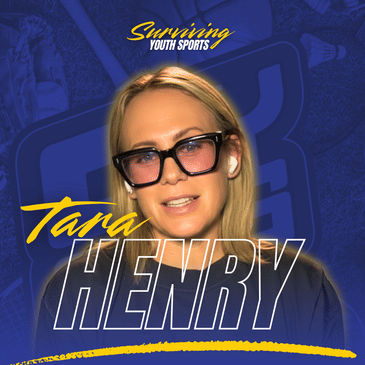
In this episode of Surviving Youth Sports, Rhett Parker sits down with Tara Henry, General Manager of Softball America and a leader in international softball development.
Tara shares what she’s learned from coaching and traveling around the world and how youth sports culture in the United States often prioritizes winning over development.
The conversation explores coach education, parent influence, and why building relationships with athletes matters more than chasing results.
For parents, coaches, and athletes trying to navigate youth sports the right way, this episode is a reminder that when winning becomes the point, kids often lose.
View Shownotes
Rhett Parker: Hi, this is Rhett Parker again for another episode of Surviving Youth Sports. And super lucky today, I have my partner in softball America, Tara Henry. And I can't wait to do this episode because I have learned more about softball in the last, what, 14 months than probably my entire life. And it is the fastest rising sport. in the country, hands down in my opinion. ⁓ I gotta say Tara, because when we kind of met, I was over in London and you got the London connection. So I gotta say Tara, it's Tara, but I say Tara. So that's just our thing, but welcome to the show.
Tara Henry: I it. I was just gonna say that. Like, I love that you stuck to what the Brits call me. Because I do know that you're, secretly are or want to be British, as do I. ⁓ So no, I'm just, I'm so happy to be here. I can't wait to chat with you about all things youth sports and really dive into some key concepts and just chat about kind of what we're seeing here.
Rhett Parker: little bit.
Tara Henry: in the States and maybe learn a little bit from what I've seen in some other countries.
Rhett Parker: And to put that into context, know, Tara is the, I love it. I love it. the, basically runs the national team softball program for Great Britain for the senior team, which the Olympics are coming up in 2028 in LA, where by the way, you're basically from. that, I mean, that, that we'll get into that. super exciting. And also the 18U team, which You know, those, that's who we're talking about, Youth Sports, right? And so, you know, tell us a little bit about that in terms of, you're all over the international stuff. I think it was Prague this summer and Brazil, think they had an 18 year tournament, but so you're seeing Youth Sports from a softball perspective very uniquely because you're all over the world.
Tara Henry: Yes, so just we were in Prague and Spain actually in Pamplona, Spain with the under 18s this past year. yes, we're seeing, just, I'm able to see how other countries, other cultures really tackle youth sports. And I would say it's a lot different than we do here. And it's more community-based, it's more local-based. So you're going to play with your next door neighbor or whoever lives in your same local community rather than. ⁓ What we have nowadays is more club-based sports where, you know, parents are driving, you know, two, three hours for their kids. Some are lucky if it's only 45 minutes, but, you know, I've just been really lucky and fortunate through the game of softball to be able to experience different cultures and see what it's like. Like we talked about Spain, we talked about Prague. I've been in West Africa, I've been in South Africa, Southeast Asia. all throughout Europe and I do think if we're able to take a little bit from each one of those countries, I think we could potentially solve our youth sports problem. But I don't know, I'm always optimistic about anything and everything. I think in general, the fact that kids are moving around and playing sport is really, really important. But there are some things that we probably should address, ⁓ which I just don't know who's gonna do that. Maybe it's you, Rhett.
Rhett Parker: Maybe it's me, maybe it's me. That's my hope to a certain degree that it's people like you, it's people like the parents we've had on the show. And it's it's knowledge and experiences that hopefully we can share that everyone's path is different. And we want you to take what we're talking about and just think about it. you know, not right here, but maybe a little bit right here. And every kid's very different. And what you want might not be what your kid wants. And you said something really interesting, because I want especially, you know, obviously softball, but in in football, I gotta call it football, or my my kids, ⁓ football coaches, American soccer is actually what I mean, in London will get upset with me, but they don't play tournaments. They don't play tournaments. They train and they play some games. They train, train, train and their best coaches coach four year olds, five year olds, six year olds. And you're just like, ⁓ okay. This is different. they also club they play for over there. They charge, they charge quite a bit of money, but man, you're sitting back as a parent going, ⁓ my God, this is amazing. Like they're training. They're teaching them how to be good human beings. They're doing like, okay. I'm going to get behind this, is night and day from what we do night and day. And so what is it like softball? What's your take on that?
Tara Henry: Yeah, I think it's a great example. And it's one of the reasons why our women's national team staff took the under 18 squad and the under 22 squad, because you start realizing what's happening in your lower levels and what we need to work on in terms of development. And that's a development of the player and that's development of the girl or woman as well. And so for us, it was really important for Great Britain softball to understand where we were. ⁓ what we were good at at our lower levels and what we needed to work on. So I think it's really important to have that continuity. I do like how the Brits do it and coaching the kids from a very young age. And then it gives you an idea of your entire landscape. Now, do you spend your entire time with, do I spend our entire time with our under 18s? No, but now I have a better idea of some athletes that can potentially help us in our quest for LA 2028. And that to me is really, really important to understand what exactly you have as an organization and how you can help further development. Because I do think in softball there are very few programs, and this is club, this is high school, ⁓ this is college that really focus on player development and really do it well. I'm not saying that we're great at it, but I do think there's a huge focus on it in understanding how to develop players, because we have to.
Rhett Parker: I have to.
Tara Henry: We're in a position where we have to develop players. And so in our current model, I don't see that happening as much. We're seeing your pay for play type of mentality. You're seeing kids play for one team and then go to another team. And coaches are recruiting players, but they're recruiting good players and not really potentially making them better either. So I do think what this comes back to, Rhett, is
Rhett Parker: Mm-hmm.
Tara Henry: really focusing on coach education, number one, first and foremost, and then parent education. That's number two for me. Uh-huh. And then ⁓ the youth the player development type of piece. But I do really think it starts with coach education. And for softball, we didn't really have levels or classifications like they do in football, like FIFA, you know. ⁓
Rhett Parker: Mm-hmm. Mm-hmm. Mm-hmm. Yeah.
Tara Henry: your level one we don't really have that for a really long time which the WBSC which is the world baseball softball confederation our global governing body has started to implement those coaching certifications so i do really think it starts there with coach education and then quickly to parent education and then player development.
Rhett Parker: Please, please, because, and I wasn't there, thank goodness. And I wanna talk about this, it's kind of, boys sports very different than girls, because I'm able to see both, okay? And some stuff is very positive that it's different, and some stuff is not as positive. But my wife was at, my daughter's playing basketball, okay? And it's tournament basketball. But, you know, 20 years ago, it would be a good rec team. Okay. And they're having fun. And that's most important thing. And she was hurt, broke her foot, dealt with that awful. They paused the game yesterday in a semi final basketball game, lower division, whatever. And my daughter wears number 13, because her mom did and there's another number 13. And they go Call the tournament director, eject those two. What? mean, and my wife's like, I don't, I don't sit by anybody. She's off in the corner being her introverted self. I don't, she's like, thank God you weren't there. Because I mean, I hate to say this, but I'm going to be yelling not because it's, it could have been my daughter, could have been anyone else. It doesn't really matter. What are we doing? Like who cares? And then my daughter after the game is like, why are they trying to throw me out? And my wife's like, to win. And she's like, tearing up a little bit. And I'm like, really? This is like, this is what we're doing. So you talk about coach, what's a coach and a parent. But you're talking about this isn't even like, high level. This is like glorified. It's a little bit better than whatever rec is now, which doesn't exist. But like, why are we doing this? Like and and and girls are a lot more sensitive to it. than the boys are from my perspective in terms of like, why are they coming after me? We're out here having fun a little bit more, right? Which the boys should be too, so that's a positive, but what in the hell are we doing? Like give me, and I know, cause you play in way different eras. mean, we've gone over our careers are like very weak, graduated high school same time essentially, and you played at UCLA and national champion and. You and my wife are in the national champions club without me. ⁓ you know, but how do we get that? And it's never gonna be perfect, but how do we get that gone? Like, how do we get that mentality that that game actually means something gone?
Tara Henry: it's a great question ⁓ ⁓ story, ⁓ sad as it is, it's not surprising. But I do think it falls for me back on our culture ⁓ a culture that ⁓ ⁓ focused ⁓ results ⁓ than ⁓ process. ⁓ it starts at a really, really young age ⁓ your ⁓ kids are getting ice cream for a touchdown or they're getting ⁓ you know, $5 for a goal from their mom and dad. Like, I, my biggest question, my biggest question, and I say this to my nephews when they call me because my nephew plays soccer, he plays flag football, and he's five. And he'll call and it'd be like, Auntie Titi, you know, I scored a touchdown. I'm like, that's cool, Jack. Did you have fun? Like I always ask, said,
Rhett Parker: That's everywhere, that's everywhere.
Tara Henry: First and foremost, did you have fun? And for me, think going back to simple play, like, you know, at UCLA I actually took a class on the origins of play. it so, I mean, it one of those athletes classes, like, here, go and take this, right? Like, this is gonna be, this is gonna be an easy grade. But in all actuality, the fundamental of it is just, even adults, like, we don't play very much anymore. And for kids,
Rhett Parker: Yeah, exactly.
Tara Henry: And youth sports, I just, wish we could get back to really enjoying the process, really enjoying playing next to your best friend, you know, Tommy at the age of five. I still have some of my best friends that I played with my entire career in club ball. And to be honest with you, right, that's the reason I stayed playing softball. I was playing soccer, I was playing tennis, I was playing basketball. And the reason I chose softball is because my best friends played it. And so I just wanted to hang out with my friends and play sports and really be at the ballpark all day long. It didn't feel like work. It didn't feel like, I have to play another game. It was fun. It was really fun. I mean, we won a lot too. So I think winning is fun, but that was later on. Right. But early on, it wasn't really about that. I think I credit that to my mom and
Rhett Parker: Mm-hmm. That makes it fun, yeah, for sure, for sure.
Tara Henry: She was the one that took me around and really was the positive one and just would say, hey, how was your game? And I say, oh, it was good. He's like, okay, did you have fun? That was my mom. And so I think that is translated to me, but I don't know how we get back there. That story is not surprising. I would just put white tape on the one or the three or make it a different number. I've done that before.
Rhett Parker: Mm-hmm. Mm-hmm. Yeah, I mean, it's just, yeah. But what do we, I mean, it's like halfway through the game. I'm like, and my wife was like, I was just so thankful you weren't there because.
Tara Henry: ⁓ Yeah, well, what do you have done?
Rhett Parker: ⁓ I would have started yelling at their coach for sure. Don't do what I said to do parents. But ⁓ I would do it from the perspective ⁓ of, ⁓ and I've had so many jobs in sports, youth sports, different sports, but I would do it from perspective of what are we doing? Who cares? Do you want me to give you the trophies? I'll give them to you. Like, win or lose, you can go take the trophy. You can tell people at your work tomorrow, guy, that your team won. Like, here you go. Because the girls, they're not gonna care in about 24 hours. Because now my daughter is like, we talked a little bit about last night, she's up today and this morning and she's like, because we're getting ready to go to London ⁓ in Friday, you know, she's like, ⁓ we got to pack this, we got to pack this. ⁓ I'm so excited. I'm like, I mean, she doesn't care. Yeah, she was upset for a short period of time. They had a third place game. She played great. They won third place, came home, you know, talked about it. Awesome. She's and she kind of was like, thank God, because I'm a fairly loud human being when it comes to that stuff. But Exactly. I'm, I'm doing it from the, I'm here to support the girls on both teams. I don't care if we win or lose this game at all. Would I prefer my daughter and my son's teams to win? Absolutely. Who wouldn't? But I don't really care. It doesn't make one bit of difference in my life. I'm going to go home and be like, okay, that was, that was fun. I love watching you play, you know, and all my kids are very different. My six year old if he loses, I mean, it's gonna be like, all right. All right, we got to calm him down. He's gonna go off on it for like the next two hours. Like, he's very different. I have to treat him differently than her. But man, I and I love the fact that you brought up your mom because I was talking I talked to my dad this morning and we talked about some of my new sports stuff. And you just I almost like teared up. I'm like, He loves it and he remembers this and he remembers this positive thing and then he remembers maybe a negative thing or two in there and then I kind of just skip past that but your mom loved it. I guarantee if you called her today and go, hey, remember when this happened? She's gonna laugh and that's what it's about, right?
Tara Henry: Well, my mom, just, in working in women's softball and dealing with parents and being on the media side and being a player and a coach, I just, I realized how lucky I truly was when I was younger to have my mom as my mom. And she still to this day has every score book of every game I ever played. My mom scored and there's score books in the garage that are all stacked up.
Rhett Parker: Awesome, that is awesome
Tara Henry: And she scored every game and she sat next to the dugout. She didn't say a word. And I played on the batbusters, which is a pretty good travel ball team. And the head coach would sit there and ask my mom questions and she never interjected. She just gave the facts and she sat right by the dugout. She never said a word to me. And again, she would say, you know, do you want a chicken or rice bowl? Because chicken and rice bowls used to be really big back in the day ⁓ at tournaments.
Rhett Parker: Yeah, I remember. I remember.
Tara Henry: ⁓ And she was the same one that that ran the snack bar. So I think it again I said coach, you know education looking at coaches But then parents and again, I was really lucky and fortunate to have a mother that was so supportive and still to this day I had a tennis match today and playing, you know doubles and I called her this morning I call her after every match and I talked to her and so I hope parents that are listening to this or watching this know how
Rhett Parker: Let's go!
Tara Henry: much they impact their kids and know that the car ride home does matter and what you say to your kids matters to them because you know I'm still remembering how my mom treated me and this is you know 30 years later just remembering how she was and her energy and her positive attitude and what that did to impact me and I truly believe it's I was undersized I truly believe that it It was because of her that I believed that I could do anything and everything. And so I hope parents know that their words, not only their words, but their actions and their energy matters to their kids and those athletes.
Rhett Parker: Well, I'll say I say before we became partners, it might be some YouTube videos of you playing in the World Series. I might have. ⁓ wow. Okay. I might have seen some footage of you being an athlete out there back when we were, you know, completely athletic and not. I mean your tennis match. How's your body feel? How's your body feel after the match though? Is your are you you like totally good? Because I did I like was doing something with my son's 12 year old team this weekend. I was like
Tara Henry: Hey, watch out, I'm still playing tennis. I don't know, Rhett.
Rhett Parker: Dude, my knee, I twisted it. I like twisted my knee. Are you good? Does your body, does your body feel good after?
Tara Henry: Knee. First time ever. First time is like, nope, first time in my career that my left knee now hurts. I think meniscus, but I just ice it. I'm like, I called my mom and dad and I was like, oh, now I know what it feels like to be old. I have to ice my knee. So left knee is the only issue. Yep. I'm icing. Yep. I'm there. I made it.
Rhett Parker: Yep. I iced it. Yep. That's awesome. That's welcome. Welcome. It's been a while for me because I played through so much stuff when I was in my 20s that I wouldn't recommend other people doing that. My body's probably a little bit more destroyed. ⁓ you know, it's interesting because we the car ride home because constantly comes up, you know, in in these in this podcast, and I continue to stress everybody. Some kids and I have I have one for sure and probably two
Tara Henry: you
Rhett Parker: They don't want you to tell them, I love watching you play. They'll get mad. They want to know what they could have done better, what they did good. So it is not black and white. And I, if I breathe towards my oldest son, I mean that he'll be a sour puss for the next week. Like even if I breathe, tell me he's good game. No, no, it wasn't. Tell him it's a bad game. He'll sink. Like it is different. My daughter wants to talk about what did I do good? What did I do bad? What can I improve on? If you don't say anything to her, she thinks she did something wrong. And it's not necessarily, I love watching you play. It's she's ready to dissect the game right away. And so I think as a parent, do take a step back and go, how is my kid reacting to what's coming out of my mouth right now? Because you can be really hard on some kids and their reactions. Fine. You can not be hard on kid. Now I would say that's a minority. My youngest is going to be, I mean, I am, I'm going to have to coach him. because I don't want to put it on anyone. I he, I, I've joked, he's going to get thrown out of some of these, some of these tournament in little league games because he argues with the umpire. I mean, he just does because he's so competitive and we're him. got to go. Okay, dude. We have to focus on the right. And it's just gonna be a, I'm gonna get mad at him as much as I'm gonna praise him. And that's just him. And other kids are gonna be like that and other kids are not like that. And you really need to focus as a parent, I think, and as a coach, you know this, cause you coach and we're both teachers, we both coach. How is this person reacting to what I'm saying? Because some, again, if I got praised as a player, I didn't like it. I let my guard down. When they were on me all the time, choice words, I played a heck of a lot better. It just, was just the way that I was, but not everyone's like that. So this is strictly for the coaches. Cause you're, you're a teacher, you're a coach. Man, what, what can a coach do to pick up on what the athlete's putting down? What do you have on that? Because by the way, just to throw this out there, shout out to Great Britain. They are winning a lot of medals at these tournaments they're playing in. So look out for them in the Olympics.
Tara Henry: Yeah. ⁓ great question. And as you were speaking, I just was thinking about that. And I think you're right. You think figuring out how to speak to your athletes is, is been a change in coaching. I could say my coaching style 20 years ago was a lot different than it is today. And standards are always standards. I don't think that's ever an issue. I think if you can have high standards, hold your players accountable. and make sure they understand where you stand. That's really important. understanding how to communicate with them is important. And whether you go through personality tests, which we've done a few of those, whether it's ⁓ having one-on-one calls, I do a lot of more one-on-one calls with our athletes now just to get to know them. What are they like outside of softball? And this generation of athlete really responds well to that. They want to know that you care. They want you to know that
Rhett Parker: Thank you.
Tara Henry: They matter. They want you to know that they are more than softball. it's not who they are, doesn't define them. It's just something that they do. And I hear that a lot from them. And so we've shifted. I've done a lot of one-on-one calls. And we're remote. So there's some challenges with that. So I don't get to see them every day. I don't get to see what they're like when they walk down the hall. I just have to check in on them a lot more. When we come together, I just do a lot of team bonding stuff. We go over our history. We do a lot of exercises. We did ⁓ different types of icebreakers with them. One of them was speed dating. It was ridiculous. We had them all sitting and switching and learning new things about it. But Coach G, I had no idea so-and-so ⁓ was into painting. Or I had no idea so-and-so ⁓ was more of a craft person. I think now the focus is more on the person rather than the player, them as how they perform, the X's and O's or the defenses or their swing or working on how they move or their pitches. And it's more about understanding who they are as human beings and really connecting to them on that level and just really caring and saying, hey, like, how are you? And being just...
Rhett Parker: Thank you. Genuine about it though. Genuine about You said something earlier that I'm gonna respond to now. Because you talked about people jumping from team to team, okay? And social media is obviously big. We didn't have it. Thank goodness. I mean, I can't speak for yourself, but I don't know if I'm in the same spot I'm in with, know, maybe some of the things I did on the field would have.
Tara Henry: really really caring and genuine. Don't know.
Rhett Parker: definitely gone viral a few times, I would say is a different era. ⁓ But the coach goes and recruits this player and then posts on social media like that person that coach developed that person, that person is using that player and it's not just softballs everywhere as a commodity. That guy or gal doesn't care about that player at all. That person is using that player as a ⁓ you know, basically a stepping stone to go get more players to go win more for their ego. And it's not everybody. So I just sounded completely big as it but and to go get the next player to go pay more money. Like and that is a systemic problem. You talk about cost, you talk about all these things. And it's a a a it's a it's shell game. It's a shell game because if that person wasn't with you for more than a year, the development is so limited. You don't know that. Like, and I'm not saying you're not giving them opportunities. I'm not saying that everyone that does that is bad. That's not what I'm saying. But like, really do your research on who cares about your kid because, ⁓ you know, and we all say this last thing, because it's something we've talked about on the show before, like even the guys that I know that I'm close with in the big leagues and the minor leagues and high level college guys, I don't even talk to them about baseball. Because everybody in the world wants a piece of them. Same thing with your athletes. They're high level athletes. They want to know that like, man, if I'm done tomorrow, will coach T still love me, still want to be in my life, whether I'm a, I say firefighter, a pilot, a teacher, a coach, maybe I'll go work as an intern at Softball America. You know what I mean? Like that's what they want to know. And I know you're behind that. I know you're behind that.
Tara Henry: Mm-hmm. Yeah, I think it's really, really important. And that is where you see good teams become great. And I believe that is what we're building. And I'm so proud of the athletes that make up our squad because you can see they genuinely enjoy one another. genuinely enjoy playing with one another. it's like, it's this team that they call each other. They drive to visit each other in the off season. They're so well connected. I told them they're going to be friends for life. Those are your sisters and they're the ones that are going to be there when you need it, whether it's on the field or not on the field. It's to me, the most important part of sport. Like I said, I've got still some of my best friends that I met through sport. I think as you peel back those layers, what we can take a look at and go back to is really the relationship piece and making sure that sport goes back to community, goes back to development and developing relationships and not having it be transactional. hear this a lot, transformational rather than transactional. And I don't quite know if transformation is the word that I use, but I hope it really goes back to community-based because I do think, and community can be many things, but for me, I love that aspect of playing with football with my brothers when I was young or playing with the neighbors.
Rhett Parker: And probably beating up on him too, by the way. Yeah.
Tara Henry: Yeah, roller hockey down in the cul-de-sac, like with our whole cul-de-sac was full of 30 kids just playing sports every day after school. And so I don't know how we do that and I don't know how to get kids off their phones, but if we could somehow make it to where we're going back to those days, I think it would really benefit ⁓ our kids.
Rhett Parker: Well, we had a 12 year old team bonding weekend at an Airbnb this weekend and minute they walked through the door, said, put them in the bag, took everyone's phone for the weekend. Some of them had, I mean, was like, dude, you got to, you like our antsy, you got to get off your phone, bro. But it is transformational because I say all the time, hey, all we have, I mean, we don't have money in our bank accounts from when we played, okay? We have experiences and relationships that transformed us into who we are. It's about experiences and relationships. And if you're really lucky, you got some money in your bank account because you're one of the best players in the world. Awesome. And, and if that's something that you wanted to do and you accomplish that great. You're the very few of the few of the few of the few. Right. ⁓ so what is and we do this at the end of every show, what is the biggest thing that you want people to take away and it could be players, could be coaches, parents, give us the give us the the Tara, you know, Tara Henry, you know takeaway.
Tara Henry: I think this is for coaches. Just get to know your athlete. Genuinely care and understand that we don't really know what's going on at home. We don't really know what's going on at school. most of the time, sport is a way for those athletes to let that all go. So I just think building relationships and starting ⁓ really starting early when you meet the athletes is the most important part. And again, getting to know them as people and not necessarily as just your shortstop or your pitcher or your catcher, just really building those relationships and building that trust because it takes time. And I think for those coaches out there that are just getting into it, I think that's the biggest advice I can give is building relationships and building trust ⁓ right at the get go. And it's going to take different timeframes because not everybody's the same.
Rhett Parker: Mm-hmm.
Tara Henry: going to take forever for some athletes and then some it's going to click right away. But don't give up. Don't give up on your athletes ⁓ and always be there for them.
Rhett Parker: I mean, and that's why you are who you are. ⁓ that's it. It is a great takeaway. you know, ⁓ I and people don't know, we talked before the shows, we talk after the shows about different things when people come on. And I said this to you and I want to co-host some episodes with you because I think it would be amazing ⁓ for a lot of different reasons. So... ⁓ I really appreciate coming on and we are trying to survive as parents and coaches, use sports. mean, that's surviving use sports. We named it for a reason. And it's people like you, and I'll give you a great compliment that are out there trying to make sports better the way that you know how to do it. And I would just say that obviously as your partner and friend, like we just keep it up. I can't tell you how, you know, don't cry when I say this, but I can't tell you how, how it's relieving, especially having a daughter, how nice it is to know there's role models out there because we try to, even though softball is probably not our sport, you know, she's still playing, but we try to watch what you're doing ⁓ because we're trying to empower her to be a strong independent woman too. So ⁓ we appreciate it and ⁓ We really appreciate you coming on.
Tara Henry: Thanks. guess Miles wanted to make sure he made it part of the show. No, I think he hit the nail on the head having female role models and having women in decision-making positions has been really cool to see as women's sports move forward. And I want to thank you and Ian and Jen. I think we're building something pretty cool at Softball America.
Rhett Parker: Yeah, that's all right. That's all right. There we go. Mascot. We got a mascot. We got our we got our first mascot. No, that's awesome.
Tara Henry: And it's because of all of your support that we're able to do it. And I know we've got big things ahead. So, and co-hosting, yeah. I mean, just add it to the schedule. Why not? I mean, so much time.
Rhett Parker: Yeah, we both have a ton of time, by the way, everybody. Well, we will get it figured out. We'll make time because this is all supposed to help people. And I know that's what you're all about. So, thanks for coming on and again to all the. surviving.